This Boston ADU guidebook starts with the single biggest change in a decade for single-family homeowners: since February 2, 2025, Massachusetts homeowners can build an accessory dwelling unit up to 900 square feet on a single-family lot without a zoning variance, special permit, or board hearing. Jamaica Plain, Roslindale, Hyde Park, Dorchester, and Roxbury are all covered under this statewide law, which means the biggest obstacle to adding rental income or family housing on your existing lot is gone.
-
The Massachusetts Affordable Homes Act, effective February 2, 2025, allows ADUs up to 900 square feet by right in single-family zoning districts statewide, including all of Boston’s neighborhoods.
-
“By right” means a building permit process, not a discretionary zoning board hearing. No neighbor sign-off is required.
-
Construction costs in 2026 typically range from $40,000 for a basement or garage conversion to $360,000 for a detached backyard cottage, depending on scope and site conditions.
-
MassHousing offers second-mortgage ADU financing of up to $250,000 for detached units and $150,000 for attached units to eligible homeowners.
-
An ADU changes how your property competes at resale, shifting a single-family home into a category that appeals to rental-income buyers and multigenerational households.
-
Juan Murray at Juan Real Estate Group works directly with single-family homeowners across Jamaica Plain, Roslindale, Hyde Park, Dorchester, and Roxbury to run the ROI math before they commit to a design.
For years, adding a second unit to a single-family lot in Boston meant a discretionary hearing in front of a zoning board, often with no guarantee of approval. That changed when Governor Healey signed the Affordable Homes Act on August 6, 2024, and the ADU provision took effect the following February. Juan Real Estate Group has fielded a steady stream of questions from Roslindale and Hyde Park homeowners since the rule shifted, mostly some version of: can I actually do this on my lot, and does it pencil out?
This guidebook covers what the law technically allows, what construction realistically costs in 2026, how financing works, and what an ADU does to your home’s value when you eventually sell. If you own a single-family home in Jamaica Plain, Dorchester, or anywhere else in the city, this is the resource to read before you call a contractor.
What Does “By Right” Actually Mean for a Boston ADU?
By right means the decision is administrative, not discretionary. You apply for a building permit the same way you would for a kitchen renovation, and the city cannot deny it on the grounds of neighborhood character or a “no impact” test the way a zoning board once could. This is the core mechanism behind the entire Boston ADU guidebook conversation in 2026.
There is no public hearing and no requirement to prove the unit will have zero effect on parking or traffic. You meet the technical standards, submit the permit application, and build. The Massachusetts Legislature designed the Affordable Homes Act specifically to remove the discretionary layer that stalled ADU projects for years.
The requirements are straightforward. First, the ADU cannot exceed 900 square feet, or 50% of the primary home’s finished living area, whichever is smaller. Second, the property must sit in a single-family zoning district. Third, you still need a standard building permit and a Certificate of Occupancy before renting the unit. Fourth, the unit must connect to city sewer, which covers nearly every property across Jamaica Plain, Roslindale, Hyde Park, Dorchester, and Roxbury.
What you no longer need: a variance, a special permit, or written consent from neighbors. That single change is what separates the 2026 landscape from where things stood even two years earlier, when a homeowner in Roslindale might have spent a year and thousands of dollars pursuing a permit that a zoning board could still reject.
What Types of ADUs Can Boston Homeowners Build?
An ADU is a self-contained secondary housing unit with its own entrance, kitchen, and bathroom, built on the same lot as an existing single-family home. The Affordable Homes Act does not dictate a single design. It allows several configurations, and the right one depends heavily on your lot size, existing structure, and budget.
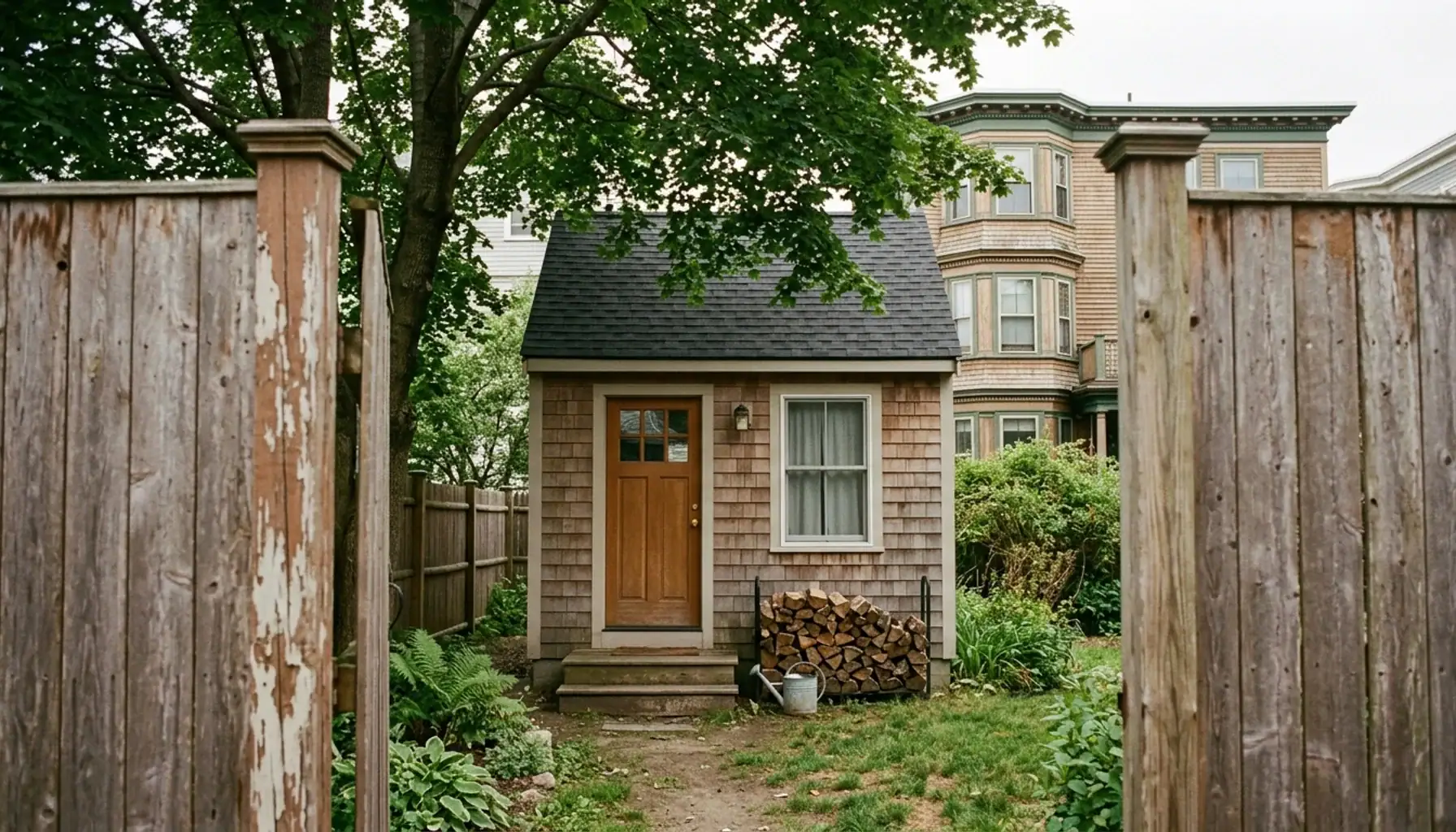
A detached backyard cottage is a freestanding structure built new on the property, separate from the main house. This option gives you the cleanest separation between the primary residence and the rental unit, which many tenants and family members prefer, but it also involves full foundation work, new utility connections, and typically the highest cost per square foot.
A garage conversion takes an existing detached garage and builds out living space with its own entrance. Many triple-decker-adjacent lots in Roxbury and Dorchester have detached garages that are strong conversion candidates, since the shell and roofline already exist.
A basement conversion adds an independent entrance, kitchen, and bathroom to existing below-grade space. This tends to be the least expensive path because you are working within walls that already stand, though older Jamaica Plain and Roslindale foundations sometimes need waterproofing or ceiling height adjustments to meet code.
An attic conversion or an addition built onto the primary home rounds out the common options. Whichever form you choose, the unit must function independently. A large guest room with a mini-fridge does not qualify; a true ADU needs its own kitchen and bathroom under one roof or attached structure.
What Does It Actually Cost to Build an ADU in Boston in 2026?
Construction costs for a Boston ADU in 2026 typically range from $40,000 for a basic basement or garage conversion to $360,000 for a full detached backyard cottage, with the final number driven by your existing structure, lot conditions, and finish level. Greater Boston construction costs generally sit toward the higher end of any national range, so homeowners should budget conservatively.
Here is how the major categories break down:
-
Basement or garage conversion: $40,000 to $120,000. Existing footprint saves on foundation and framing; cost swings with electrical, plumbing, and insulation condition.
-
Attached addition (new unit built onto the home): $100,000 to $200,000. More framing and utility work than a conversion, less disruptive than a detached build.
-
Detached backyard cottage: $150,000 to $360,000. Widest range, full foundation, new utility connections, and site prep on the lot.
Design and architecture fees typically add another 10% to 15% on top of construction costs. Boston building permit fees generally run $1,500 to $9,000, scaled to the project’s valuation. These are planning-level ranges, not quotes, since every lot in Hyde Park or Dorchester carries its own soil conditions, sewer line access, and structural quirks.
If the upfront number gives you pause, MassHousing offers a dedicated ADU financing program built around this exact law. Eligible homeowners can borrow up to $250,000 for a detached unit or up to $150,000 for an attached unit through a fixed-rate second mortgage. A no-interest Home Modification Loan option also exists for ADUs designed to house residents over 60 or with disabilities, which is worth exploring if the project is meant to keep a parent close rather than generate rental income.
How Do You Choose Between ADU Types on a Boston Lot?
The right ADU type depends on three factors: what already exists on your lot, how much separation you want between the main house and the new unit, and how much cash or financing you can commit before construction starts. Most Roslindale and Hyde Park homeowners we talk with default to whichever option costs less, but that is not always the right call.
Start by walking your lot with a contractor who has pulled ADU permits in Boston already, not one learning the process on your project. Ask specifically whether your existing basement ceiling height meets code, because many pre-1930 triple-decker-era foundations in Jamaica Plain fall short and require excavation, adding real cost.
Next, decide your goal. If the unit is for a long-term tenant, a detached cottage or garage conversion with a private entrance and no shared walls tends to rent for more and creates fewer friction points than a basement unit accessed from inside the main house. If the goal is housing an aging parent or adult child, a basement or attached addition keeps everyone closer and usually costs less.
Common mistakes homeowners make: skipping a title search for easements before assuming a detached cottage will fit, underestimating utility upgrade costs (a 100-amp electrical panel often cannot support a second full unit), and failing to confirm the projected rent with a local property manager before finalizing the design.
Before committing to a design, get a straight answer on how the numbers actually work on your specific lot. That is the exact gap our ADU and value-add strategy guidance at Juan Real Estate Group is built to close, because a generic online ADU calculator has no idea what a Dorchester or Roxbury lot is actually worth.
How Does an ADU Change Your Home’s Value at Resale?
A single-family home with a legal, permitted ADU competes in a different buyer category than a plain single-family home, because it now appeals to buyers who want rental income offsetting their mortgage in addition to those who simply want a bigger house. This shift matters most in neighborhoods where two- and three-family properties have historically traded at a premium over single-families.
In Jamaica Plain and Hyde Park specifically, multi-family properties have long drawn strong buyer interest from owner-occupant investors looking to house-hack. A single-family lot with a legal ADU can pull some of that same buyer pool, without the seller having to convert the whole property into a formal two-family under a different zoning classification.
The amount an ADU adds to your eventual sale price depends on the unit’s size, build quality, configuration, and the specific comps active in your neighborhood at the time you list. It is not a fixed multiplier, and any agent who quotes you a guaranteed dollar figure before pulling actual MLS comps for your street is guessing. The honest answer requires a comparative market analysis built around your specific lot, not a generic online estimate.
The return-on-investment math is the question to answer before you break ground, not after. If a detached cottage costs $150,000 to build and it adds less than that to your eventual sale price, plus whatever rental income you collect in the meantime, the project may not clear the bar compared to simply investing that capital elsewhere. This is precisely the kind of pricing strategy work Juan Murray runs for homeowners before they commit to a contractor, using real MLS data specific to Jamaica Plain, Roslindale, Hyde Park, Dorchester, and Roxbury rather than a citywide average that tells you nothing about your block.
If you are weighing an ADU purely as a pre-sale improvement, it also helps to understand how net proceeds calculations work in Boston so you can compare the ADU investment against your actual take-home number, not just the sale price.
What Are the Financing and Legal Details Homeowners Overlook?
The financing detail most homeowners miss is whether their lender will count projected ADU rental income toward the debt-to-income calculation used to qualify for the loan. Not every lender treats this the same way, and getting pre-qualified for an ADU project is a genuinely different conversation than a standard refinance or home equity line.
Ask your loan officer directly, before you sign anything, whether they will use an appraiser’s projected rent for the ADU or whether they require an existing lease before counting any income. This single answer can change whether the project is affordable at all.
On the legal side, a Certificate of Occupancy is mandatory before you can legally rent the unit, and skipping this step to get a tenant in faster creates real exposure if anything goes wrong later. Massachusetts has also tightened several homeowner and landlord obligations recently, including the statewide smoke and CO detector certificate requirements that apply the same way to a new ADU as to the main house.
If you are financing through a MassHousing second mortgage, note that program eligibility and income limits can shift year to year, so confirm current terms directly with MassHousing rather than relying on a figure you read somewhere else. The Affordable Homes Act itself came out of the Massachusetts Legislature, and the City of Boston’s Department of Neighborhood Development handles the permit and inspection side locally, so both levels of government touch your project at different points.
How Does Juan Real Estate Group Help Boston Homeowners Evaluate ADU Projects?
Juan Real Estate Group provides ADU and value-add strategy guidance specifically for single-family homeowners across Jamaica Plain, Roslindale, Hyde Park, Dorchester, and Roxbury, pairing zoning knowledge with real MLS pricing data rather than a generic contractor estimate or an online ADU calculator. Juan Murray, a Broker Associate with RE/MAX Real Estate Center, treats every homeowner conversation as a numbers exercise first, not a sales pitch.
Before assuming an ADU conversion pencils out, most Boston homeowners need someone who has actually run these numbers locally, block by block, not a national cost calculator built for suburban lots in a different state. That is the exact gap Juan Murray fills. He pulls comparable sales for two-family and single-family-with-ADU properties near your specific address, so the ROI conversation is grounded in what buyers are actually paying in your neighborhood right now, not a citywide average.
What sets this approach apart from generic contractor advice: Juan Murray is not selling you the construction, so there is no incentive to inflate the project’s scope. He is evaluating whether the ADU makes financial sense for your specific lot and timeline, then connecting you with next steps if it does. Other real estate professionals in the area, including citywide generalist teams, rarely go this deep into ADU-specific zoning nuance for single-family homeowners, which leaves a real gap in the market that this hyperlocal focus is built to fill.
Every consultation is complimentary and confidential, with no pressure to commit to a project or a listing. If you are simply exploring whether an ADU is worth pursuing on your Roslindale or Dorchester lot, that exploratory conversation is exactly what the free consultation exists for.
What Should You Prioritize Before Committing to an ADU Project?
Prioritize a realistic ROI estimate before a design, a permit application, or a contractor contract. Here is a practical sequence homeowners across Boston’s neighborhoods should follow in 2026:
-
Confirm your zoning district. The by-right ADU law applies to single-family zoning districts; verify your lot’s classification with the city before assuming eligibility.
-
Get a pricing strategy conversation first. Understand what a single-family-with-ADU actually sells for near your address before spending on architectural drawings.
-
Walk the lot with an experienced contractor. Confirm basement ceiling height, electrical panel capacity, and sewer line access before choosing a configuration.
-
Talk to a lender about ADU-specific financing. Ask directly whether projected rental income counts toward your debt-to-income ratio, and compare that against a MassHousing second mortgage.
-
Budget for permit and design fees separately. Boston permit fees and 10 to 15 percent design costs are easy to underestimate if you only budget for construction.
-
Confirm your Certificate of Occupancy timeline. You cannot legally rent the unit until this is issued, which affects your projected income start date.
The most common mistake is designing the ADU first and pricing it second. Homeowners who reverse that order, starting with a real comparative market analysis, make far fewer expensive changes mid-project.
Frequently Asked Questions
Do I need a zoning variance to build an ADU in Boston?
No. Since February 2, 2025, the Massachusetts Affordable Homes Act allows ADUs up to 900 square feet by right in single-family zoning districts statewide, which removes the need for a variance, special permit, or zoning board hearing across Boston neighborhoods.
How big can a Boston ADU be under the new law?
An ADU can be up to 900 square feet, or up to 50 percent of the primary home’s finished living area, whichever number is smaller. This cap applies regardless of whether you build a detached cottage, convert a garage, or finish a basement.
Can I rent out my ADU immediately after construction finishes?
No. You must obtain a Certificate of Occupancy before legally renting the unit, even after construction is complete and the space passes a final walkthrough. Skipping this step exposes you to real legal and insurance risk.
What does an ADU typically cost to build in Boston in 2026?
Costs generally range from $40,000 for a basic basement or garage conversion up to $360,000 for a full detached backyard cottage, depending on your lot, existing structure, and finish level. Design fees and Boston permit costs add to that base construction range.
Does MassHousing offer financing specifically for ADU construction?
Yes. MassHousing offers a second-mortgage ADU loan program with up to $250,000 available for detached units and up to $150,000 for attached units, plus a no-interest Home Modification Loan option for ADUs designed for residents over 60 or with disabilities.
Will building an ADU increase my home’s resale value?
A legal ADU typically expands your buyer pool to include rental-income-focused buyers and multigenerational households, which can shift your pricing ceiling. The actual dollar impact depends on your neighborhood’s comps, the unit’s quality, and market conditions at the time of sale, so a specific number requires a real comparative market analysis rather than a general estimate.
Should I get an ADU pricing consultation before hiring a contractor?
Yes. Getting a realistic ROI picture before committing to a design avoids expensive mid-project changes. A free, confidential consultation with a broker who tracks local comps, rather than a national cost calculator, gives you numbers specific to your street before you spend on architectural drawings.
Conclusion: Is an ADU Worth It for Your Boston Property in 2026?
The Affordable Homes Act genuinely changed what single-family homeowners in Jamaica Plain, Roslindale, Hyde Park, Dorchester, and Roxbury can do with their lots, replacing a discretionary zoning hearing with a straightforward building permit process. This Boston ADU guidebook covered the technical requirements, realistic 2026 construction cost ranges, MassHousing financing options, and the resale value question every homeowner should answer before breaking ground.
Whether an ADU makes sense for your specific property comes down to your lot’s configuration, your budget, and what comparable properties are actually selling for near your address, not a generic assumption about what “adding a rental unit” is worth. Juan Murray and Juan Real Estate Group have walked homeowners across these five neighborhoods through exactly this decision, using real MLS data instead of guesswork, and the conversation costs nothing to start.
If you are still deciding whether an ADU, a straight sale, or holding your property makes the most sense this year, that decision deserves a real numbers conversation before you commit to anything.
Curious whether an ADU makes financial sense for your specific lot in Jamaica Plain, Roslindale, Hyde Park, Dorchester, or Roxbury? Schedule a free, confidential consultation with Juan Murray at Juan Real Estate Group to get a realistic cost and ROI breakdown before you commit to anything.
Written by Juan Murray, Broker Associate, RE/MAX Real Estate Center, 30+ years Boston real estate experience at Juan Real Estate Group