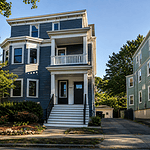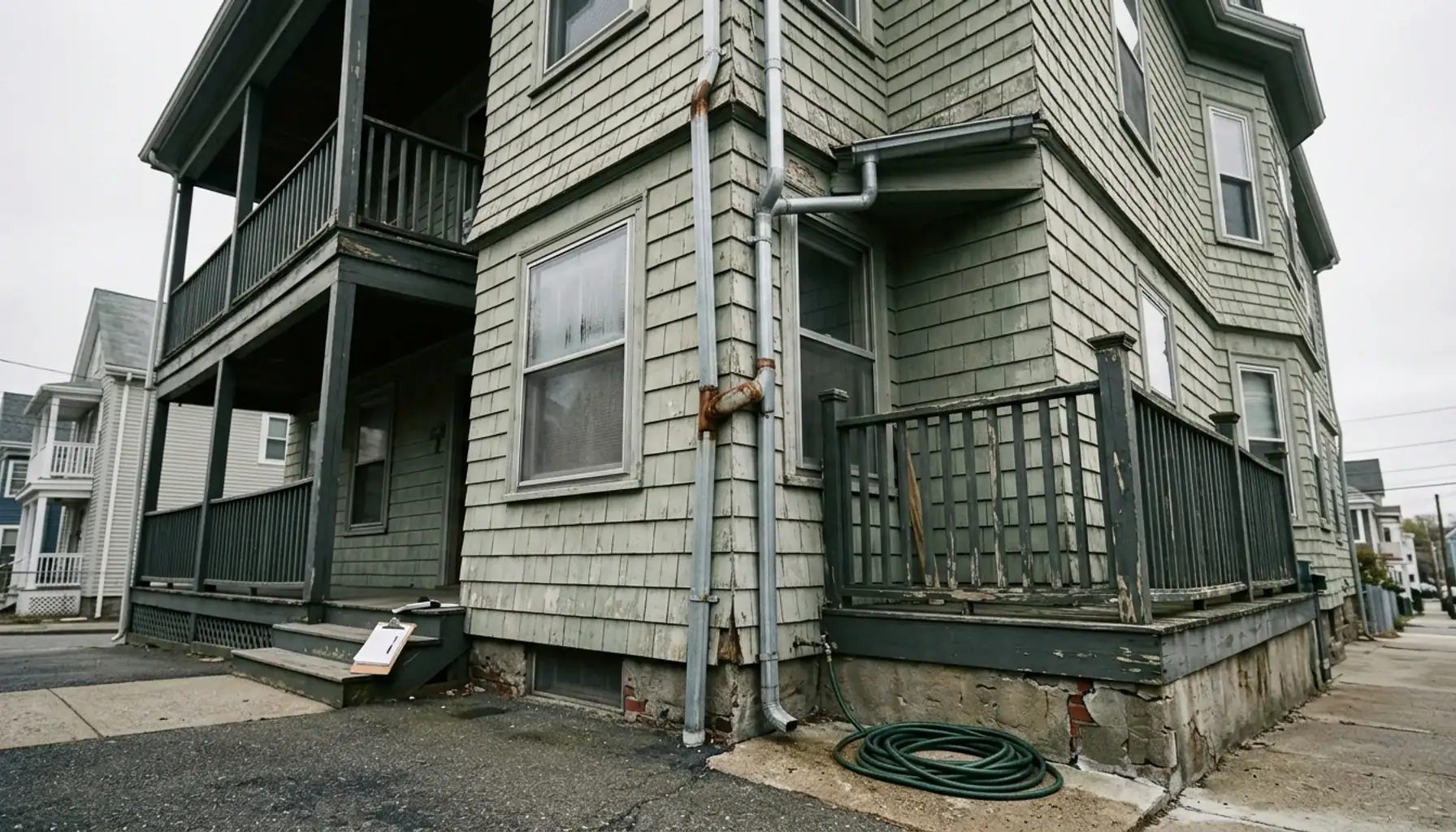
What will fail a home insurance inspection? The most common failures are roofs older than 20 to 25 years or showing missing shingles, knob and tube or aluminum wiring, foundation cracks, broken or missing smoke detectors, and rotted deck stairs without railings. In Massachusetts, insurers also flag aging oil tanks and unpermitted electrical work, which are common in triple-decker housing stock.
-
Roofs older than 20 to 25 years, or ones with missing shingles and active leaks, are the single most common reason insurers deny or cancel coverage in Massachusetts.
-
Knob and tube wiring, still present in a meaningful share of Jamaica Plain, Roxbury, and Dorchester triple-deckers, is treated as an automatic red flag by most carriers.
-
Massachusetts sellers can no longer condition an accepted offer on a waived inspection under 760 CMR 74.00, effective October 2025, which has pushed inspection volume up across Greater Boston.
-
Most carriers give homeowners 10 to 30 days to complete repairs after a failed inspection before nonrenewal or cancellation takes effect.
-
The Boston metro averages roughly $411 per standard home inspection as of 2025-2026, above the national average of about $343.
-
Buyers waiving inspections in Greater Boston dropped to 12% in 2026, down from 18% the year before, according to a January 2026 local market report.
If you own or are about to buy a triple-decker in Roxbury, a two-family in Dorchester, or a single-family in Roslindale, an insurance inspection is not the same paperwork exercise it was five years ago. Carriers are underwriting older Boston housing stock more carefully in 2026, and a failed inspection can mean a canceled binder days before closing.
This checklist covers exactly what will fail a home insurance inspection in the Massachusetts market, why Boston’s older housing stock draws extra scrutiny, and what repairs actually move the needle versus what’s cosmetic noise. We built this guidance from patterns we see repeatedly across properties in Jamaica Plain, Hyde Park, and Dorchester, not from generic national advice that ignores how this housing stock actually ages.
You’ll also get a straight answer on timelines, repair cost ranges, and what happens if you can’t fix everything before your reinspection window closes. At Juan Real Estate Group, we walk buyers and sellers through this exact scenario often enough that we can tell you which failures are dealbreakers and which ones are a $200 fix.
What Is the Biggest Red Flag in a Home Insurance Inspection?
The biggest red flag in a home insurance inspection is an aging or damaged roof, specifically one older than 20 to 25 years or showing missing shingles, curling, or active leaks. Insurers treat roof condition as the primary driver of claim risk because water intrusion causes the most expensive and frequent property damage claims nationally.
Roofs matter more than any other single system because a failing roof creates cascading problems: attic leaks, water stains on ceilings, mold growth, and electrical hazards when wiring runs through wet insulation. For example, in a Jamaica Plain triple-decker with an original slate or asphalt roof pushing 25 years, an inspector doesn’t need to find a leak to flag the property. Age alone often triggers a decline.
Roofing red flags that an inspector documents include multiple missing or cracked shingles, damaged or rusted flashing around chimneys and vents, rolled or non-standard roofing materials, and visible sagging in the roofline. Any one of these issues, combined with roof age past the 20-year mark, is typically enough for an insurer to require replacement before binding a policy.
Second on the red-flag list is outdated electrical wiring, specifically knob and tube systems still found in a portion of Boston’s pre-1950s housing stock. We cover knob-and-tube wiring separately below because it deserves its own section, given how often it derails Dorchester and Roxbury deals.
What Not to Say to a Home Insurance Inspector?
The safest approach when speaking with a home insurance inspector is to answer only what’s asked, provide documentation for any past repair, and avoid volunteering unprompted details or guessing at technical facts about your roof age, wiring, or plumbing. Inspectors document what they observe plus what homeowners tell them, so vague or inaccurate statements can trigger deeper scrutiny.
Specifically, avoid saying things like “the roof leaked a few years ago, but we patched it” without documentation of the repair, because that statement alone can prompt a request for a roofing contractor’s invoice or a full reinspection. Similarly, don’t say “I think it’s knob and tube, but I’m not sure” when a homeowner can pull the panel cover and check, or ask an electrician to confirm the wiring type in writing beforehand.
Do not downplay known issues either. If a Hyde Park single-family home has a sump pump due to a wet basement, the owner should state this plainly and demonstrate that the equipment is functioning. As a result, inspectors who sense evasiveness tend to broaden the scope of their review, which increases the odds that an unrelated failure will surface.
If you don’t know the answer, say “I’d need to check” rather than offering a number that could be wrong.
How to Pass a Home Insurance Inspection?
Passing a home insurance inspection means addressing every item on the table-stakes list before the inspector arrives: roof condition, wiring type, smoke detector function, deck and stair safety, and drainage. Most failures are preventable with $500 to $3,000 in targeted repairs completed 30 to 60 days ahead of the inspection date. That range covers the common, lower-cost fixes below, such as smoke detectors, yard hazards, and deck repairs; a full roof, electrical, or foundation replacement costs significantly more, as shown in the cost breakdown later in this guide.
First, homeowners should walk their own property using the same checklist an inspector uses. Test every smoke and carbon monoxide detector, replace batteries, and confirm units are present in every bedroom and hallway, since a missing detector is one of the most commonly cited explicit failure reasons in insurer guides. This single fix costs under $100 in most cases.
Second, clear gutters of dried leaves and debris, trim any tree branches that touch or overhang the roofline, and rake dead vegetation away from the foundation. Insurers specifically flag trees too close to structures and excessive yard debris as fire and structural hazards, and this fix is often the cheapest to complete, sometimes free with a weekend of yard work.
Third, inspect the deck and exterior stairs for soft or rotted wood, missing handrails, and non-code-compliant railings. A $300 to $800 carpentry repair here routinely saves a policy that would otherwise be declined outright.
Fourth, if a Roslindale or Roxbury property still has knob-and-tube wiring, budget for a licensed electrician’s assessment now. Full rewiring is rarely a quick fix, but partial rewiring of high-risk circuits can sometimes satisfy an insurer even when full replacement isn’t immediately feasible.
What’s the Worst Thing a Home Inspector Can Find?
The worst finding for insurance purposes is active structural damage, such as wide or expanding foundation cracks, combined with an uninsurable roof and outdated wiring, because multiple simultaneous hazards can lead a carrier to decline coverage entirely rather than request repairs. A single issue usually gets a homeowner a repair window; a stack of issues can get the property denied outright.
Foundation problems specifically worry insurers because they signal ongoing settlement or water intrusion that’s expensive to fix and prone to recurrence. Uneven floors, doors that stick without a clear seasonal explanation, and visible cracks wider than a hairline are the specific signs that move a foundation issue from “monitor it” to “fix it before we insure it.”
Active mold growth or persistent moisture in a basement or attic is a close second on the worst-case list, particularly in Dorchester and Roxbury multi-families where finished basement units increase moisture exposure. As a result, mold findings often require professional remediation with documentation before an insurer will reconsider coverage.
Evidence of an active termite or rodent infestation, not just prior damage that’s been repaired, also ranks among the worst outcomes because it suggests an ongoing structural risk rather than a one-time event. Combine any of these findings with an aging oil tank, a Boston-area quirk covered in the deep-dive section below, and a homeowner is looking at a genuinely difficult underwriting conversation.
What Are the Table Stakes Failures Every Massachusetts Homeowner Should Know?
Table-stakes failures are the baseline set of issues nearly every insurer checks for, regardless of carrier or property type: roof age and condition, wiring safety, plumbing materials and leaks, structural integrity, and basic safety compliance. Missing any one of these categories on a pre-inspection walkthrough is the most common reason Boston homeowners get an unpleasant surprise.
-
Roof: Age over 20–25 years, missing shingles, damaged flashing — $8,000–$18,000 full replacement
-
Electrical: Knob and tube or aluminum wiring, exposed wires — $4,000–$15,000+ depending on scope
-
Plumbing: Galvanized steel or polybutylene pipes, active leaks — $2,000–$10,000
-
Foundation: Wide cracks, uneven floors, water intrusion — $3,000–$20,000+
-
Safety features: Missing smoke detectors, no deck railings — $100–$1,000
-
Yard hazards: Overhanging trees, gutter debris, poor drainage — $150–$1,500
Insurers also scrutinize HVAC conditions, including refrigerant leaks, severe age-related deterioration, and signs of insect or animal infestation. As of 2026, some carriers have further narrowed underwriting criteria, meaning a property that would have passed comfortably in 2022 might now prompt a follow-up request for documentation. Massachusetts’ own regulatory shift, discussed in the next section, has made this table-stakes checklist matter more, not less.
How Does Massachusetts Regulation Affect What Will Fail an Inspection?
Massachusetts’ 760 CMR 74.00 regulation, effective October 2025, prohibits sellers from conditioning an accepted purchase offer on a buyer waiving their right to a home inspection in most residential transactions. This rule change has directly increased the number of inspections conducted across Greater Boston, meaning more properties are being formally evaluated than in prior years.
Before this rule, a competitive Jamaica Plain or Roslindale listing might see multiple buyers waive inspection contingencies to win a bidding war, meaning defects went undiscovered until an insurance carrier’s inspector found them, sometimes after closing. As a result, buyers are now catching roofing, wiring, and structural issues earlier in the transaction, before the issues become an insurance surprise.
According to a local January 2026 market report, buyers waiving inspections in Greater Boston fell to 12% in 2026, down from 18% the prior year, while appraisal waivers dropped to 15%. One local home inspector reported a year-over-year increase in business of more than 50% following the rule change, a clear signal that more Boston transactions now include a formal inspection.
The 760 CMR 74.00 rule includes narrow exemptions, such as auctions, foreclosures, certain family transfers, and pre-completion new construction with qualifying warranties. If you’re selling a Hyde Park single-family or a Dorchester two-family outside those exemptions, expect your buyer to inspect, and expect any red flags they find to also surface later with an insurance carrier. Our guide to old wiring and Boston home sales covers how this plays out specifically for knob-and-tube properties, and our comparison of home appraisal versus home inspection in Boston explains why these are two separate but related hurdles in any transaction.
What Do Boston’s Building Age and Climate Add to This Checklist?
Boston’s building stock and climate create failure points that generic national checklists don’t cover: aging underground oil tanks, urea-formaldehyde foam insulation (UFFI) in homes insulated during the 1970s energy crisis, and roof and siding wear accelerated by coastal salt air and heavy snow loads. These regional factors are the gaps most inspection checklists miss entirely.
Underground and above-ground oil tanks are a recurring issue in single-family homes in Roslindale and Hyde Park built before natural gas conversion became standard. Many carriers now decline coverage outright for properties with underground oil tanks over a certain age, or require a tank sweep and removal before binding a policy. If a homeowner isn’t sure whether their property has a buried tank, confirming this is worth doing before listing or before an insurance renewal.
UFFI insulation, common in homes retrofitted during the 1970s, is a specific red flag some Massachusetts insurers still ask about directly on applications, even though this concern predates roofing or wiring issues. If a Jamaica Plain or Roxbury property has original wall insulation from that era, documentation showing it was tested or removed can prevent a surprise decline.
New England’s freeze-thaw cycles and heavy snow loads also accelerate roof and foundation wear, which is part of why Boston-area insurers apply roof age thresholds more strictly than carriers in warmer states. Multi-family fire code requirements for 2- to 4-unit buildings, relevant to Dorchester and Roxbury triple-deckers, add another layer: fire-rated separation between units and proper egress paths are checked alongside standard insurance criteria.
What Happens If You Fail a Home Insurance Inspection?
Failing a home insurance inspection typically triggers one of three outcomes: a required repair within a set window, a coverage exclusion for the specific hazard, or outright policy decline or nonrenewal. Most carriers give homeowners 10 to 30 days to complete repairs and submit proof before canceling or refusing to renew a policy.
For minor issues, such as a missing smoke detector or overgrown tree branches, the fix is usually quick, and the insurer requests photo confirmation once it’s complete. For major issues, such as an aging roof or active foundation cracks, a homeowner may receive a formal notice specifying the needed repairs and a firm deadline, often 30 days from the date of notification.
Specifically, if a carrier finds knob-and-tube wiring, the carrier may issue a coverage exclusion for electrical fire damage rather than declining the entire policy, which leaves the homeowner technically insured but exposed to the exact risk that matters most. This is a common outcome seen with older Roxbury and Jamaica Plain triple-deckers that haven’t been rewired.
In the most serious cases, where multiple hazards stack (an old roof plus outdated wiring plus foundation cracks), an insurer may decline to write the policy at all, or nonrenew an existing one. At that point, options narrow to specialty or surplus-lines coverage, which typically costs more and offers narrower protection.
How Do You Negotiate With Your Insurer After a Failed Inspection?
Negotiating after a failed inspection means providing documentation of completed or scheduled repairs, requesting a specific reinspection date, and asking directly whether a partial fix or full replacement would satisfy the carrier’s underwriting requirement. Insurers will often accept phased repairs if a homeowner communicates proactively rather than silently waiting out the deadline.
Start by calling the agent or underwriting department directly, rather than waiting for a form letter. Ask exactly what would need to change to reverse the decline: is it strictly roof age, or specifically the missing shingles? Is there any knob-and-tube wiring, or only wiring on circuits serving high-load appliances? Getting this specificity in writing focuses repair spending.
If full repair isn’t financially feasible in the required window, ask about a temporary exclusion endorsement that removes coverage for that specific hazard while keeping the rest of the policy intact. This isn’t ideal, but it can be a workable bridge while saving for a full roof replacement or rewiring project.
For Massachusetts homeowners who can’t get standard market coverage after multiple carrier declines, the Massachusetts FAIR Plan (officially the Massachusetts Property Insurance Underwriting Association) exists as a last-resort option. However, typically costs more and covers less than standard market policies. Surplus lines carriers are another option to consider before assuming a property is uninsurable.
Can You Get Insurance Coverage After Failing an Inspection?
Yes, most homeowners can secure coverage after a failed inspection by either completing the required repairs within the carrier’s window, accepting a coverage exclusion for the specific hazard, or shifting to a specialty or surplus-lines carrier. A failed inspection is rarely a permanent dead end, but it does often mean paying more or accepting narrower coverage in the short term.
If a Dorchester two-family failed inspection due to an aging roof, replacing it and submitting a contractor’s completion certificate typically clears the issue within one billing cycle. This is the most straightforward path and the one recommended whenever the repair cost is manageable relative to the overall budget.
If the failure involves knob-and-tube wiring, the homeowner can’t afford to replace it fully right away, so ask the agent about carriers that will write a policy with an electrical exclusion rider rather than declining outright. This isn’t the coverage a homeowner wants in the long term, but it keeps the property insured while planning a phased rewiring project.
For properties with multiple stacked hazards, a licensed insurance broker who works with several carriers, rather than a single-company agent, can often find at least one underwriter willing to write coverage where others declined. This step is worth taking before assuming the only option is the state FAIR Plan.
What Preventative Maintenance Avoids These Failures Altogether?
Preventative maintenance that avoids insurance inspection failures includes annual roof inspections, testing smoke and carbon monoxide detectors twice a year, trimming trees away from rooflines, and scheduling an electrical safety check every 5 to 10 years for homes over 40 years old. Consistent upkeep costs far less than emergency repairs triggered by a failed inspection notice.
Set a seasonal rhythm: clear gutters and check roof flashing every spring and fall, since Boston’s freeze-thaw cycles work debris and ice into small gaps that become bigger leaks by the following winter. This single habit, done twice yearly, catches most roofing red flags before they reach the failure threshold insurers use.
For wiring, homeowners shouldn’t wait for an insurance inspection to confirm what they already suspect. If a Jamaica Plain or Roxbury property was built before 1950 and hasn’t been rewired, get a written assessment from a licensed electrician now. Knowing the wiring status before listing, buying, or renewing a policy gives a homeowner negotiating leverage rather than a surprise deadline.
Finally, keep records. Every repair, contractor invoice, and permit should be saved and organized, because this documentation is what turns a failed inspection into a quick reinspection pass rather than a drawn-out dispute with the carrier.
Practical Guidance: A Pre-Inspection Checklist for Boston Homeowners
This pre-inspection checklist gives Boston homeowners a specific nine-step sequence to follow 30 to 60 days before any scheduled home insurance inspection, whether preparing a Roslindale listing for sale or facing a routine policy renewal review. Following these steps in order addresses the exact categories insurers check most often, from safety devices to structural condition.
-
Test every smoke and carbon monoxide detector and confirm one exists in every bedroom and hallway. Replace batteries and any unit older than 10 years.
-
Get your roof’s age and condition documented by a licensed roofer if it’s approaching 20 years. A written assessment is useful even if the homeowner doesn’t replace the roof immediately.
-
Confirm your wiring type. If knob-and-tube wiring is suspected, have a licensed electrician inspect the panel and document findings in writing.
-
Inspect decks and exterior stairs for soft wood, missing railings, and loose steps. Repair or replace before the inspector arrives.
-
Clear gutters and trim overhanging tree branches at least 3 to 6 feet from the roofline.
-
Check your basement and attic for moisture or mold, and address any active leaks before scheduling.
-
Confirm plumbing material. Galvanized steel and polybutylene pipes are known failure points; document any prior replacement with permits.
-
Review foundation walls for cracks wider than a hairline, and consult a structural engineer if there is visible active movement.
-
If the property has an oil tank, buried or above-ground, confirm its age and condition, since many Massachusetts carriers require documentation or removal.
Common mistakes to avoid: don’t schedule an inspection before completing known repairs, don’t guess at wiring type when a $150 electrician visit gives a definitive answer, and don’t assume a cosmetic fix, such as fresh paint over a water stain, will satisfy an inspector who’s trained to look underneath surface repairs.
This checklist is exactly the kind of pre-listing preparation that separates a smooth Boston sale from one that stalls at the buyer’s inspection contingency. At Juan Real Estate Group, we’ve seen firsthand how a seller who addresses roofing and wiring issues before listing in Jamaica Plain or Dorchester avoids the price renegotiation that happens when a buyer’s inspector finds these same issues mid-contract. If you’re weighing whether to repair before listing or price the property to reflect its condition, that’s a pricing strategy conversation worth having early, not after an offer falls through.
Data Snapshot: Massachusetts Inspection and Insurance Trends in 2026
The data below reflects verified 2025-2026 market patterns specific to Greater Boston, providing useful context whether you’re a first-time buyer, a triple-decker investor, or a landlord preparing to sell an occupied multi-family.
-
Buyers waiving inspections, Greater Boston: 12% (down from 18%) — January 2026 local market report
-
Buyers waiving appraisals, Greater Boston: 15% — January 2026 local market report
-
First-time buyers, Greater Boston market share: 31% — January 2026 local market report
-
Average Boston-area home inspection cost: ~$411 — 2025–2026 industry cost data (national avg. ~$343)
-
Typical repair window after failed inspection: 10–30 days — Industry standard
-
Fine for seller non-compliance under 760 CMR 74.00: up to $10,000 or 4% of the sale price — Mass. Executive Office of Housing and Livable Communities, 2025
These figures point to one consistent trend: Massachusetts buyers and insurers are both scrutinizing older Boston housing stock more closely in 2026 than in prior years. Whether navigating this shift as a seller in Roxbury or a buyer evaluating a Hyde Park condo conversion, the days of skipping inspection and hoping for the best are largely behind us, both by regulation and by market practice.
Frequently Asked Questions
Can I refuse a home insurance inspection?
You can decline a scheduled inspection, but most carriers will then decline to bind or renew your policy, since the inspection is how they verify the risk they’re insuring. Refusing an inspection rarely helps and typically delays an inevitable coverage decision.
How often do insurance companies inspect homes?
Most insurers inspect a home at the point of a new policy application, then periodically thereafter, often every 3 to 5 years or whenever a claim is filed. Older homes and properties with prior claims tend to see more frequent inspection cycles.
What fixes are mandatory after a home inspection, and which are optional?
Mandatory fixes are typically life-safety and structural issues: missing smoke detectors, active roof leaks, exposed wiring, and foundation cracks that affect stability. Cosmetic issues like worn paint or outdated fixtures are rarely mandatory for insurance purposes, though they may still matter to a buyer’s inspection.
How long does a home insurance inspection take?
A standard home insurance inspection takes 30 to 60 minutes for a typical single-family home in Massachusetts. In contrast, a Boston triple-decker or multi-family property with multiple units to review can take longer, sometimes 60 to 90 minutes, since the inspector must evaluate each unit’s wiring, smoke detectors, and safety features separately rather than assessing the building as a single dwelling.
What insurance companies are more lenient with older homes or minor failures?
Leniency varies significantly by underwriting criteria rather than by company reputation alone, and it can change year to year as carriers adjust risk appetite. Working with an independent insurance broker who quotes multiple carriers is generally more effective than assuming any single company is consistently more flexible.
Do I have to disclose knob-and-tube wiring when selling my Boston home?
Yes, in practice. Massachusetts does not have a single blanket disclosure statute covering every known defect, but a seller who is asked directly about wiring type should answer honestly, since misrepresenting a known material fact can create legal exposure. More importantly, this wiring detail will almost certainly surface during the buyer’s inspection process regardless of whether it’s disclosed upfront, since inspectors specifically check the panel type and circuit wiring as part of a standard evaluation. Our detailed guide on old wiring and Boston home sales walks through exactly how this disclosure plays out in a real transaction.
What’s the difference between a home inspection and a home insurance inspection?
A buyer typically hires a home inspector to evaluate the overall condition before purchase, while an insurer orders a home insurance inspection specifically to assess insurability and risk. Our home appraisal versus home inspection guide breaks down how these two processes, plus the separate appraisal step, fit together in a Massachusetts closing.
Can homeowners dispute a failed insurance inspection?
Yes. Homeowners can dispute a failed insurance inspection in three main ways: requesting a reinspection, providing a licensed contractor’s counter-assessment challenging the inspector’s finding, or asking the carrier’s underwriting department to clarify which specific finding triggered the decline. For example, a homeowner disputing a roof-age decline might submit a roofer’s written report confirming remaining useful life. Documentation paired with a direct conversation with the agent resolves most disputes faster than pursuing a formal appeal process.
The Bottom Line on What Will Fail a Home Insurance Inspection
The short answer stays consistent throughout this checklist: an aging roof, outdated wiring, foundation cracks, missing safety features, and yard hazards are what most often cause a home insurance inspection to fail in Massachusetts, and nearly all of them are addressable with planning rather than a scramble after a decline letter arrives. As of 2026, with 760 CMR 74.00 requiring more Boston transactions to undergo a formal inspection process, catching these issues before listing, buying, or renewing is more valuable than ever.
Whether you’re a Roslindale homeowner budgeting for a roof replacement, a Dorchester investor weighing whether to rewire before selling, or a first-time buyer trying to understand why a Jamaica Plain condo’s building insurance matters to your own policy, the pattern is the same: address the table-stakes items early, document everything, and don’t guess at wiring type or roof age when a professional assessment settles the question. Looking ahead, expect Massachusetts carriers to keep tightening underwriting standards on pre-1960s housing stock as claims data accumulates from the current inspection wave.
If you’re weighing whether to repair, disclose, or price around an insurance red flag on a Jamaica Plain, Roslindale, Hyde Park, Dorchester, or Roxbury property, that decision is easier with real MLS comps in front of you instead of a guess. Get started with Juan Real Estate Group for a free, confidential consultation with Juan Murray before you make your next move.
Written by Juan Murray, Broker Associate, RE/MAX Real Estate Center, with 30+ years of Boston real estate experience at Juan Real Estate Group