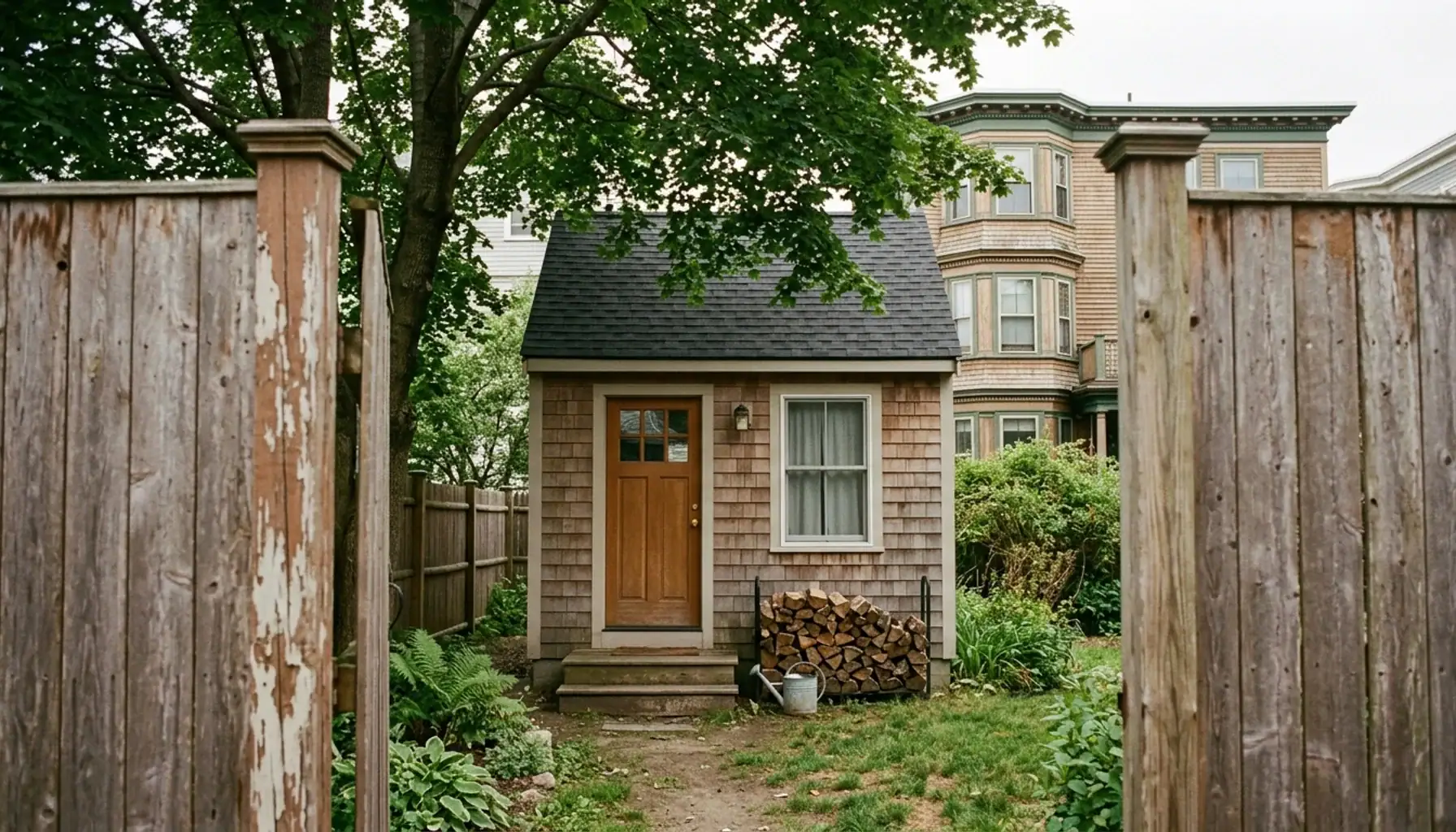
Since February 2, 2025, Massachusetts homeowners can build an accessory dwelling unit up to 900 square feet on a single-family lot without a zoning variance, special permit, or board hearing. Jamaica Plain, Roslindale, Hyde Park, Dorchester, and Roxbury are all covered under this statewide law. Construction costs in 2026 typically range from $40,000 for a basement or garage conversion to $360,000 for a detached backyard cottage. MassHousing offers ADU financing of up to $250,000 for eligible homeowners.
What does “by right” actually mean for a Boston ADU?
For years, adding a second unit to a single-family lot in Boston meant a discretionary hearing in front of a zoning board, often with no guarantee of approval. That changed when Governor Healey signed the Affordable Homes Act on August 6, 2024, and the ADU provision took effect February 2, 2025. If you’re thinking about adding an ADU and eventually selling the property, see what sellers net from a Boston home sale to model the added value. For how Boston’s house-hacking market uses units like this, see house hacking in Jamaica Plain.
By right means the decision is administrative, not discretionary. You apply for a building permit the same way you would for a kitchen renovation, and the city cannot deny it on the grounds of neighborhood character. There is no public hearing and no requirement to prove the unit will have zero effect on parking or traffic. You meet the technical standards, submit the permit application, and build.
The requirements are straightforward: the ADU cannot exceed 900 square feet or 50% of the primary home’s finished living area, whichever is smaller; the property must sit in a single-family zoning district; you still need a standard building permit and a Certificate of Occupancy before renting the unit; and the unit must connect to city sewer, which covers nearly every property across Boston’s neighborhoods.
What Types of ADUs Can Boston Homeowners Build?
The Affordable Homes Act allows several configurations. A detached backyard cottage is a freestanding structure built new on the property, giving the cleanest separation but involving full foundation work and typically the highest cost. A garage conversion takes an existing detached garage and builds out living space with its own entrance. A basement conversion adds an independent entrance, kitchen, and bathroom to existing below-grade space, and tends to be the least expensive path. An attic conversion or addition built onto the primary home rounds out the common options.
Whichever form you choose, the unit must function independently. A large guest room with a mini-fridge does not qualify; a true ADU needs its own kitchen and bathroom.
What Does It Actually Cost to Build an ADU in Boston in 2026?
Construction costs for a Boston ADU in 2026 typically range from $40,000 for a basic basement or garage conversion to $360,000 for a full detached backyard cottage, with the final number driven by your existing structure, lot conditions, and finish level.
Basement or garage conversion: $40,000 to $120,000. Existing footprint saves on foundation and framing; cost swings with electrical, plumbing, and insulation condition. Attached addition: $100,000 to $200,000. Detached backyard cottage: $150,000 to $360,000, with full foundation, new utility connections, and site prep.
Design and architecture fees typically add another 10% to 15% on top of construction costs. Boston building permit fees generally run $1,500 to $9,000, scaled to the project’s valuation. MassHousing offers a dedicated ADU financing program: eligible homeowners can borrow up to $250,000 for a detached unit or up to $150,000 for an attached unit through a fixed-rate second mortgage.
How Does an ADU Change Your Home’s Value at Resale?
A single-family home with a legal, permitted ADU competes in a different buyer category than a plain single-family home, because it now appeals to buyers who want rental income offsetting their mortgage. In Jamaica Plain and Hyde Park specifically, multi-family properties have long drawn strong buyer interest from owner-occupant investors looking to house-hack. A single-family lot with a legal ADU can pull some of that same buyer pool.
The amount an ADU adds to your eventual sale price depends on the unit’s size, build quality, configuration, and the specific comps active in your neighborhood at the time you list. The return-on-investment math is the question to answer before you break ground, not after. If a detached cottage costs $150,000 to build and it adds less than that to your eventual sale price plus whatever rental income you collect in the meantime, the project may not clear the bar.
What to Prioritize Before Committing to an ADU Project
- Confirm your zoning district. The by-right ADU law applies to single-family zoning districts; verify your lot’s classification before assuming eligibility.
- Get a pricing strategy conversation first. Understand what a single-family-with-ADU actually sells for near your address before spending on architectural drawings.
- Walk the lot with an experienced contractor. Confirm basement ceiling height, electrical panel capacity, and sewer line access before choosing a configuration.
- Talk to a lender about ADU-specific financing. Ask directly whether projected rental income counts toward your debt-to-income ratio, and compare that against a MassHousing second mortgage.
- Budget for permit and design fees separately. Boston permit fees and 10 to 15% design costs are easy to underestimate if you only budget for construction.
- Confirm your Certificate of Occupancy timeline. You cannot legally rent the unit until this is issued, which affects your projected income start date.
Frequently Asked Questions
Do I need a zoning variance to build an ADU in Boston?
No. Since February 2, 2025, the Massachusetts Affordable Homes Act allows ADUs up to 900 square feet by right in single-family zoning districts statewide, which removes the need for a variance, special permit, or zoning board hearing across Boston neighborhoods.
How big can a Boston ADU be under the new law?
An ADU can be up to 900 square feet, or up to 50% of the primary home’s finished living area, whichever is smaller. This cap applies regardless of whether you build a detached cottage, convert a garage, or finish a basement.
Can I rent out my ADU immediately after construction finishes?
No. You must obtain a Certificate of Occupancy before legally renting the unit, even after construction is complete and the space passes a final walkthrough. Skipping this step exposes you to real legal and insurance risk.
What does an ADU typically cost to build in Boston in 2026?
Costs generally range from $40,000 for a basic basement or garage conversion up to $360,000 for a full detached backyard cottage, depending on your lot, existing structure, and finish level. Design fees and Boston permit costs add to that base construction range.
Does MassHousing offer financing specifically for ADU construction?
Yes. MassHousing offers a second-mortgage ADU loan program with up to $250,000 available for detached units and up to $150,000 for attached units, plus a no-interest Home Modification Loan option for ADUs designed for residents over 60 or with disabilities.
Will building an ADU increase my home’s resale value?
A legal ADU typically expands your buyer pool to include rental-income-focused buyers and multigenerational households. The actual dollar impact depends on your neighborhood’s comps, the unit’s quality, and market conditions at the time of sale, so a specific number requires a real comparative market analysis rather than a general estimate.
Have questions? Let’s connect.
About Juan Murray
Juan Murray is a Boston broker associate with more than 30 years of experience helping buyers, sellers, and investors across Greater Boston, personally leading every transaction from the first conversation through closing.
RE/MAX Real Estate Center · (617) 721-0961
Equal Housing Opportunity. Juan Murray is licensed as a Broker in Massachusetts, regulated by the Massachusetts Board of Registration of Real Estate Brokers and Salespersons. This article is general information only and does not constitute legal, tax, or financial advice. Confirm your specific costs and obligations with your closing agent, tax advisor, or lender.