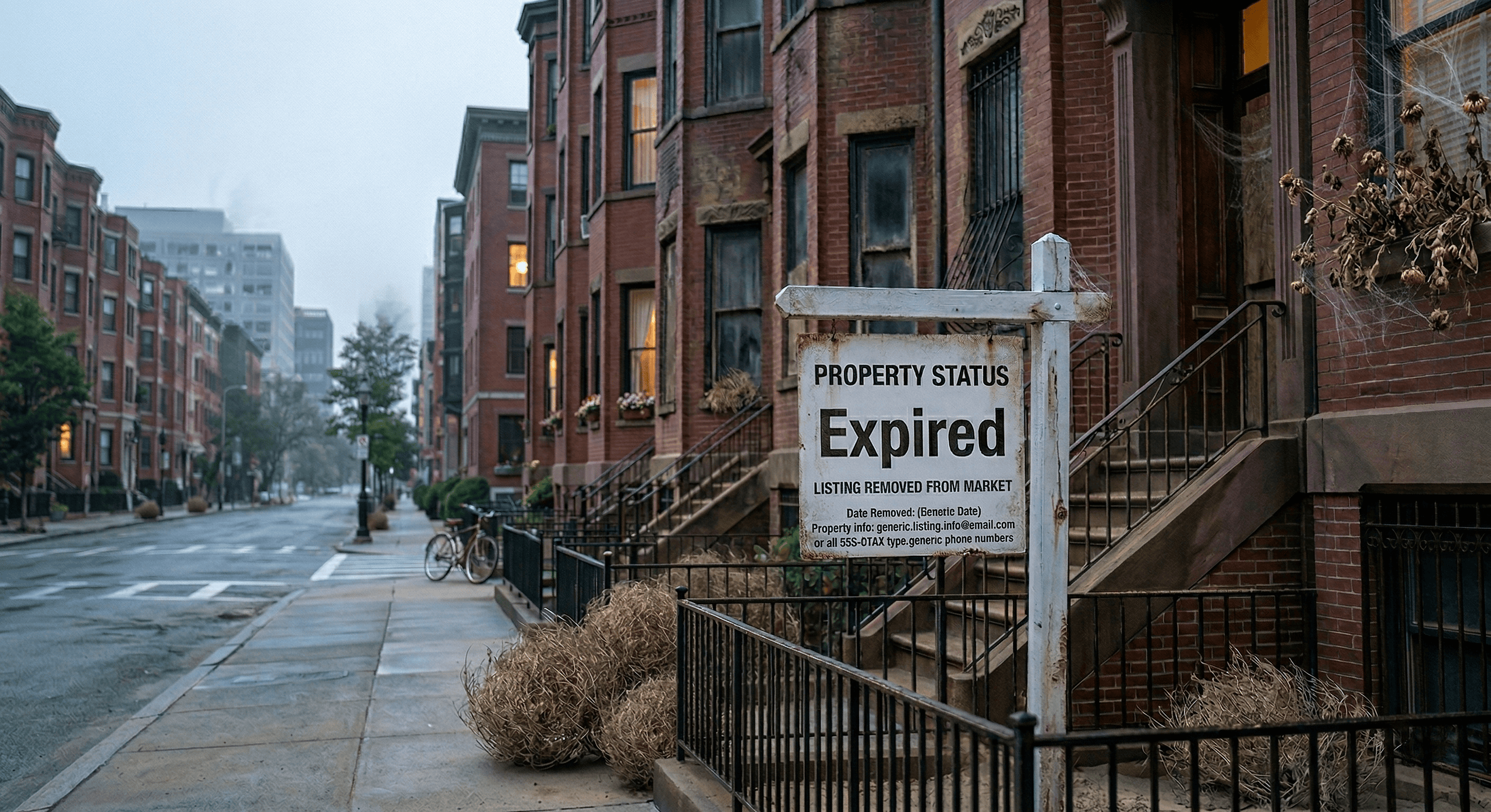
Why didn’t my Boston home sell before the listing expired?
Almost every expired listing traces back to one of three causes: price, presentation, or promotion. Diagnosing which one (or combination) worked against you is the first step to relisting with a plan that actually fixes the problem rather than repeating it.
Watching a listing expire without a sale is discouraging. You put in the time, the showings, the waiting, and you’re back where you started. But an expired listing isn’t a dead end. It’s market feedback, and if you read it honestly, it tells you exactly what to change before you go back on the market in Jamaica Plain, Roslindale, Hyde Park, Dorchester, or Roxbury.
Here’s how to diagnose what went wrong and build a relaunch that works.
The Three Reasons Homes Don’t Sell
Real estate agents talk about the “three P’s” for a reason: price, presentation, and promotion. When a home doesn’t sell, the cause almost always traces back to one or more of these three legs. Weaken one, and the whole listing becomes unstable, no matter how strong the other two are.
Price is the most common and most powerful factor. A number that’s out of step with what buyers are actually paying will keep serious buyers away before they ever request a showing.
Presentation covers your home’s condition, cleanliness, staging, and photography, both online and in person.
Promotion is how far your listing actually reached. A passive strategy that leans entirely on the MLS rarely finds the full pool of qualified buyers a competitive listing needs.
Swapping one variable, like hiring a new agent, without addressing the others rarely changes the outcome. The diagnosis has to be honest across all three.
Was Your Price the Problem?
Price isn’t about what you need from the sale or what your neighbor’s home fetched last year. It’s a direct read of current supply and demand, and the Boston market shifts throughout the year. To diagnose your pricing, look at:
Your original comparative market analysis. Were the comps truly similar in location, size, condition, and features? Were they recent enough to matter, ideally sold within the last three to six months?
Market movement while you were listed. Mortgage rates, new inventory, and seasonal shifts all move what buyers are willing to pay. A number that worked in spring can be too high by late fall.
Showing and offer activity. Few or no showings usually means the price is meaningfully off from buyer expectations. Plenty of showings but no offers often means buyers liked the home but didn’t see the value at that number. Even lowball offers are data: they show you where buyers actually place your home’s value.
Your neighborhood’s absorption rate. If the typical days on market in your pocket of Roslindale or Hyde Park is 30, and your home sat for 90 or more, that gap points squarely at price.
A real relisting strategy starts with a fresh CMA built on today’s data, not the number from six months ago. Detach from the old price and let the current comps set the new one.
Was Your Presentation Holding You Back?
Presentation is how your home makes a buyer feel, and in an online-first market, your listing photos are your home’s first and most important showing. If the photos don’t stop a buyer’s scroll, they never book the tour.
Walk through these questions honestly:
Photography and video. Were the listing photos professional, well-lit, and wide enough to accurately show the space? In competitive Boston neighborhoods, buyers expect professional photos, a video walkthrough, and a floor plan as the baseline, not a bonus.
Condition and small repairs. Scuffed walls, a leaky faucet, or a cracked tile don’t just look bad; they signal to buyers that other things might have been neglected too. These are usually inexpensive fixes with an outsized effect on buyer confidence.
Staging and decluttering. You don’t need a full professional staging budget. A deep clean, decluttered surfaces, and depersonalized rooms go a long way toward helping a buyer picture their own life in the space.
Showability. A restrictive showing schedule quietly costs you buyers who had other homes to see that same weekend. Flexibility matters more than most sellers expect.
Was Your Marketing Actually Reaching Buyers?
A strong marketing plan aims for maximum exposure to the largest possible pool of qualified buyers, not just a listing on the MLS and a sign in the yard. An expired listing is often the result of a passive strategy that stopped there.
A real promotion plan includes:
- A complete, professionally photographed MLS listing with a description that highlights what actually sells the neighborhood, proximity to the Arnold Arboretum in Jamaica Plain, the commuter rail in Hyde Park, and Roslindale Village shops in Roslindale.
- Accurate syndication to Zillow, Redfin, Realtor.com, and the other major sites where buyers are actually searching.
- Proactive outreach to agents with active buyers in your area, plus targeted digital advertising.
- A consistent, well-promoted open house schedule aimed at serious buyers, not just curious neighbors.
If your listing only ever lived on the MLS, that’s worth addressing before you relaunch.
Should You Relist Right Away or Take a Break First?
Once you’ve diagnosed the real issue, you have two paths, and the right one depends on your timeline and what needs to change.
Relisting immediately puts you back in front of buyers who may have already seen your home, and if pricing was the main issue, a quick correction can spark renewed interest fast. The risk is that a home relisted without meaningful changes can read as stale, and buyers start asking what’s wrong with it. This works best when the fix is clear and quick, such as a price adjustment or new photos.
Withdrawing temporarily buys you time for real improvements, painting, refinishing floors, addressing an inspection concern, and resets your days-on-market clock. The tradeoff is losing any currently motivated buyers and some exposure to market shifts while you’re off. This makes more sense when the problem is bigger than price, or when timing a relaunch for a stronger season (pulling a home in winter to return in spring, for example) is part of the plan.
Building a Relaunch That Actually Works
A successful relist is a full relaunch, not a quiet renewal of the same listing. It’s your chance to reintroduce the property from a position of strength, with the market’s own feedback in hand.
- A new, data-driven price based on a fresh CMA reflecting today’s market, not the one from your original listing date.
- A refreshed presentation, new professional photos at a minimum, and any condition or staging issues from your diagnosis addressed.
- A new listing narrative that highlights the home’s best features and any improvements, rather than reusing the original description.
- A proactive marketing push, announced to local agents, a new open-house schedule, and a fresh digital campaign, rather than a passive relist.
One Massachusetts-specific note: sellers cannot ask buyers to waive their right to a home inspection. That means winning offers in this market come down to price, presentation, and marketing doing their job, making your home the clear choice so buyers compete on financing, appraisal terms, and closing flexibility instead.
An expired listing feels like a failure, but it’s really an unsuccessful market test. Diagnose it honestly, fix what actually caused it, and you’re in a far stronger position the second time around.
Frequently Asked Questions
How long should I wait before relisting an expired property in Boston?
There’s no fixed rule. If the fix is a price correction, relisting right away often makes sense. If you’re making real improvements or want to reset the days-on-market count, waiting 60 to 90 days is a reasonable window.
Do I have to relist at the same price?
No, and you usually shouldn’t. An expired listing is the market telling you the original price didn’t match what buyers were willing to pay. A successful relaunch typically starts with an adjusted price based on a fresh analysis.
Will buyers know my home was listed before?
Yes. Buyers and their agents can see a property’s listing history in the MLS. That’s exactly why a real relaunch, a new price, new photos, a new narrative, matters more than a quiet relist that looks identical to the last one.
Should I switch agents when I relist?
A new agent can bring fresh marketing and a clearer read on pricing, which genuinely helps. But a new agent without a real fix to price or presentation will run into the same wall. The strongest relaunches pair a new strategy with a new agent, not one without the other.
If your listing expired and you’re not sure whether the issue was price, presentation, or promotion, that diagnosis is exactly where to start. Juan Murray, Broker Associate with RE/MAX Real Estate Center, works with sellers across Jamaica Plain, Roslindale, Hyde Park, Dorchester, and Roxbury to build a relaunch plan grounded in what actually happened the first time. Schedule a complimentary and confidential consultation to map out your next move.