Real Estate, Simplified ….

Boston-area real estate, simplified

Real Estate, Simplified ….

Boston-area real estate, simplified

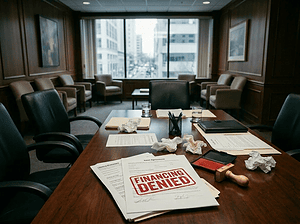
Couple being informed of loan denial by financial advisors in office

Why Does Mortgage Financing Fall Through? A Boston Guide

Mortgage financing falls through when a buyer’s lender withdraws or denies final loan approval after a purchase agreement is already signed, usually because of a low appraisal, a change in the buyer’s financial picture, or a gap between pre-qualification and full underwriting. In Massachusetts, what happens next depends almost entirely on whether the buyer properly exercised the financing contingency in the Purchase and Sale Agreement before its deadline.

TL;DR

  • Mortgage financing typically falls through due to a low appraisal, a buyer’s changed financial situation between pre-approval and closing, or reliance on a soft pre-qualification instead of full underwriting.
  • Massachusetts treats financing contingency deadlines as time-of-the-essence, meaning a buyer who misses the notification window by even a day may lose contingency protection.
  • Most Massachusetts Purchase and Sale Agreements include a liquidated damages clause, which typically lets a seller keep the deposit, often around 5% of the purchase price, if a buyer defaults outside a valid contingency.
  • Massachusetts is an attorney-closing state, so a real estate attorney, not the seller or the escrow agent alone, determines who is entitled to the deposit when there is a dispute.
  • Sellers in Jamaica Plain, Roslindale, and Hyde Park generally relist quickly and, in a tight-inventory market, a fallen-through deal is rarely the setback it feels like in the moment.
  • As of October 2025, Massachusetts banned inspection waivers, which has shifted some of the risk profile in financed offers and made contingency clarity even more important in 2026.

If you’re a Boston seller who just heard the words “the buyer’s loan fell through,” you already know the sinking feeling. You cleaned the place, sat through showings, negotiated terms, and finally exhaled when you went under agreement. Now you’re staring at a deal that unraveled a week or two before closing, wondering what you’re actually entitled to and what happens to your listing.

At Juan Real Estate Group, we’ve walked sellers across Jamaica Plain, Roslindale, and Hyde Park through this exact scenario more times than any of us would like. The good news: Massachusetts contract law gives you real protections, and the current Boston market usually absorbs a fallen-through deal faster than sellers expect. This guide breaks down why financing collapses, what your Purchase and Sale Agreement actually controls, and what to do in the first week after the call comes in.

We’ll also cover the deposit rules that trip up first-time sellers, the difference between a valid contingency and a missed deadline, and how the 2025 inspection waiver ban has quietly changed the risk calculus for financed offers heading into 2026.

Why Does Mortgage Financing Fall Through Before Closing?

Mortgage financing falls through most often because the appraisal comes in below the agreed purchase price, the buyer’s financial situation changes between pre-approval and closing, or the buyer never had full underwriting approval to begin with. Understanding which cause applies to your deal tells you how much of the problem was about your home versus about that specific buyer.

A low appraisal is the most common trigger. If the lender’s appraised value comes in under the contract price, the bank will not fund the full loan amount, and the buyer either has to bring extra cash to closing or renegotiate. This is a distinct scenario from a financing denial, and it deserves its own strategy. Our detailed breakdown of home appraisal vs home inspection in Boston explains why these two processes get confused and how each one can independently derail a closing.

Second, a buyer’s financial picture can shift in the 30 to 60 days between pre-approval and closing. A new car loan, a job change, a missed payment, or a dip in credit score can be enough for an underwriter to pull back an approval that looked solid weeks earlier.

Third, many buyers carry only a pre-qualification, not a fully underwritten commitment. A pre-qualification is a soft estimate based on stated income and self-reported debt. It is not verified. The gap between a pre-qualification letter and true underwritten approval is where a surprising number of Boston deals quietly die.

Finally, the property itself can be the problem. Structural issues, safety code violations, or systems like old knob and tube wiring can cause certain loan types to be declined outright, regardless of the buyer’s financial strength. If you’re unsure whether your property’s electrical system could create financing friction for a future buyer, our guide on old wiring stopping a Boston home sale walks through what lenders actually flag.

What Does the Financing Contingency in a Massachusetts P&S Actually Control?

A financing contingency is a clause in the Purchase and Sale Agreement that lets a buyer cancel the deal and recover their deposit if they cannot obtain a mortgage commitment by a specific date. In Massachusetts, this single clause determines almost everything about what happens to the deal, and to the deposit, when a buyer’s loan does not come through.

Here’s how it works in practice. The buyer agrees, in writing, to apply for financing by one deadline and to obtain a loan commitment by a second, later deadline. If the commitment does not arrive, the contingency gives the buyer a documented way to exit the contract. But that exit only works if the buyer follows the rules exactly as written.

Massachusetts courts and standard P&S language treat these deadlines as time-of-the-essence. That legal phrase means the dates are not suggestions. A buyer who applied for financing on time but notifies you of the denial one day after the contingency deadline may have already lost the protection that clause was supposed to give them.

This is why the first question a Massachusetts real estate attorney asks after a financing collapse is always the same: did the buyer properly exercise an active financing contingency, or had it already expired? Our overview of the Massachusetts Purchase and Sale Agreement covers how these contingency clauses get drafted and negotiated before you ever get to this point.

If the contingency was valid and properly exercised, the buyer is not in default. They used a protection they negotiated for, and Massachusetts practice typically has the deposit returned to them. The deal ends. It’s frustrating, but it’s clean, and it does not expose you to further dispute.

What Happens to the Deposit When Financing Falls Through?

The deposit’s fate depends on whether the buyer had a valid, timely financing contingency at the moment the deal collapsed. If the contingency was still active and properly invoked, the buyer generally gets the deposit back. If the contingency had already expired, been waived, or was never triggered correctly, most Massachusetts P&S agreements let the seller keep the deposit through a liquidated damages clause.

In Massachusetts, deposits typically arrive in two stages. A smaller good-faith deposit accompanies the initial Offer to Purchase, and a larger deposit follows when the P&S is signed, often bringing the combined total to roughly 5% of the purchase price. On a $900,000 property in Roslindale, that is not a trivial sum sitting in an attorney’s escrow account.

Most standard Massachusetts P&S agreements include a liquidated damages clause. In plain terms, that clause states that if the buyer defaults outside a valid contingency, the seller’s remedy is limited to keeping the deposit. You do not get to keep the deposit and separately sue for additional damages; the deposit is the agreed-upon resolution.

If your P&S lacks a liquidated damages clause, other remedies may exist, but they depend heavily on exact contract language and can require litigation. This is not a situation to navigate without professional help. Massachusetts is an attorney-closing state, and your closing attorney, not your listing agent, is the one who reads the contingency language and tells you where you legally stand.

One detail that surprises first-time sellers: an escrow agent generally cannot release deposit funds to you simply because you’re frustrated with the outcome. If the buyer disputes the release, the money can remain in escrow until both parties agree or a court resolves the dispute. This is exactly why a well-drafted P&S with unambiguous contingency deadlines protects you before the deal ever falls apart.

Professional attorney office workspace with wooden desk and modern furnishings in Boston
A stylish office or workspace area featuring a wooden desk with a black chair and modern furnishings, including a potted plant, contemporary artwork, and mid-century style chairs on warm hardwood flooring.

How Do You Compare a Valid Contingency Exit Versus a Buyer Default?

The distinction between a valid contingency exit and a buyer default determines your entire financial outcome. A valid exit returns the deposit to the buyer and closes the matter. A default, by contrast, typically entitles you to keep the deposit under the liquidated damages clause. The table below breaks down the key differences sellers need to understand.

Scenario Contingency Status Typical Deposit Outcome Seller’s Next Step
Buyer applied on time, denied by deadline, notified in writing on time Valid and properly exercised Returned to buyer Relist promptly; deal is closed cleanly
Buyer’s loan commitment date passed with no written notice Expired Seller generally keeps deposit under liquidated damages Attorney confirms right to deposit, then relist
Buyer waived the financing contingency to strengthen their offer Waived Seller generally keeps deposit Attorney documents the waiver language in the P&S
Appraisal came in low, buyer cannot bridge the gap Depends on appraisal contingency language Varies; often negotiated separately Consider price renegotiation or relist at adjusted terms
Buyer disputes the deposit release Disputed Held in escrow until resolved Attorney negotiates or litigates the release

Notice that appraisal-related collapses sit in a gray area. A low appraisal doesn’t automatically constitute a financing contingency failure; it depends on whether your P&S included a separate appraisal contingency and how that clause is worded. This is one more reason the contract language, not general assumptions, determines your rights.

How Should Sellers Respond in the First Week After a Deal Collapses?

The right response to a fallen-through deal starts with your attorney confirming the deposit’s status, then moves quickly to relisting or contacting a backup offer. Sellers who wait too long to act, or who try to interpret contingency language on their own, tend to lose the momentum that a fast, clean relaunch provides.

Here’s the practical sequence we recommend to clients across Jamaica Plain, Dorchester, and Roxbury when financing collapses:

  1. Contact your attorney before anyone else. Have them review the exact contingency dates and notification language before you make any assumptions about the deposit.
  2. Ask your agent to check backup offers. If your home received multiple offers, a strong second-place bidder may still be interested, sometimes at the original terms.
  3. Reassess your pricing strategy before relisting. A quick relist at the same price often works in tight-inventory neighborhoods, but if the market has shifted since your original listing, revisit your comparative market analysis rather than guessing.
  4. Understand the “back on market” stigma is smaller than sellers assume. Buyer financing failures are common enough in Boston’s market that experienced agents and buyers alike don’t treat a BOM listing as a red flag on its own.
  5. Review your disclosures again. If any material facts changed, or if you completed repairs during the previous under-agreement period, make sure your listing reflects the current condition accurately.

Our team at Juan Real Estate Group treats this moment as a pricing strategy reset, not a panic point. A clean relaunch with accurate market positioning, backed by real MLS data rather than an automated valuation estimate, typically brings a qualified buyer back to the table faster than sellers expect.

Boston skyline with turquoise-topped building and historic brick architecture downtown waterfront
A stunning panoramic view of Boston’s iconic skyline featuring the distinctive turquoise-topped building, historic brick architecture, and diverse skyscrapers set against a clear blue sky. This image captures the downtown waterfront perspective with industrial foreground structures visible in the lower frame.

What Has Changed for Boston Financing Contingencies Heading Into 2026?

The most significant recent shift affecting financed offers is Massachusetts’ ban on inspection waivers, which took effect in October 2025. This regulation means buyers can no longer waive their right to a home inspection to win a bidding war, which indirectly affects how financing contingencies get negotiated in competitive Boston offers.

Before the ban, some buyers waived both inspection and financing contingencies to appear more competitive, especially in high-demand pockets of Jamaica Plain and Roslindale. That practice increased the odds of a late-stage collapse, because a waived financing contingency removes the buyer’s legal safety net entirely. Now that inspection waivers are off the table, more buyers are negotiating financing contingencies with realistic timelines instead of stripping out protections to win a bid.

Additionally, with a notable share of Boston buyers reportedly waiting for mortgage rates to drop before committing, sellers in 2026 should expect more buyers entering contracts with tighter financing margins. A buyer stretching to qualify at a higher rate has less cushion if their financial situation shifts even slightly before closing.

This context matters for pricing strategy too. Absorption rates and days-on-market data give a far more accurate read on how quickly a relisted home will attract a new, qualified buyer than a generic online estimate ever could. If you’re evaluating whether your neighborhood’s current pace supports a quick relaunch, a straight conversation with someone tracking real comps beats guesswork every time.

What Should Landlords and Investors Know If a Tenant-Occupied Sale Falls Through?

Financing collapses on a tenant-occupied multi-family sale carry extra complexity because Massachusetts tenant protections remain in effect regardless of what happens to the buyer’s mortgage. If your triple-decker sale falls through due to financing, your existing leases, tenant notices, and any occupancy agreements you made with the buyer typically stay in place until you relist and go under agreement again.

Landlords selling a two- or three-family property with tenants in place should also revisit whether any tenant-related representations made to the previous buyer need to be re-disclosed to a new one. Buyers financing a multi-family purchase, particularly with FHA or conventional multi-unit loans, often require more documentation on lease terms and rent rolls than single-family buyers do, which can itself become a point of financing friction.

If you’re navigating a sale where tenants remain in place, our guide on selling with tenants covers the legal notice requirements Massachusetts landlords must follow, separate from anything related to the buyer’s financing status.

Practical Guidance: How to Reduce the Risk of Financing Falling Through Again

Reducing the odds of a second collapse starts with vetting the strength of your next buyer’s financing before you accept an offer, not after. A pre-approval letter alone tells you very little; the type of underwriting behind it tells you almost everything.

Here’s what we recommend to sellers relisting after a financing failure:

  • Ask your agent to request a fully underwritten pre-approval, not just a pre-qualification letter. The difference between the two is often exactly where the previous deal fell apart.
  • Confirm the lender is local or has closed deals in Massachusetts recently. Lenders unfamiliar with Massachusetts’ attorney-closing process and contingency norms sometimes miss deadlines that cost buyers their protections.
  • Watch the size of the buyer’s down payment relative to their loan amount. Buyers stretching to the edge of their approval have less room to absorb a low appraisal or a rate change.
  • Don’t automatically accept the highest offer if the financing terms are weaker. A slightly lower offer with a stronger, fully underwritten commitment often closes more reliably than a higher offer with a thin contingency.
  • Keep your disclosures and any known property issues, like older wiring, front and center. Surprises discovered mid-underwriting are a common cause of last-minute lender pullback.

None of this guarantees a smooth close, and no one should promise you a specific sale price or a fixed timeline. But a sharper read on buyer financing strength, backed by real data rather than a generic online estimate, meaningfully improves your odds the second time around.

Frequently Asked Questions

Why does mortgage financing fall through most often in Boston?

Mortgage financing most often falls through in Boston due to a low appraisal, a change in the buyer’s financial situation between pre-approval and closing, or reliance on a soft pre-qualification instead of a fully underwritten loan commitment. Property-specific issues like outdated electrical systems can also cause certain loan types to be declined.

Do I get to keep the deposit if the buyer’s financing falls through?

Whether you keep the deposit depends on whether the buyer’s financing contingency was still valid and properly exercised. If the contingency expired or was never validly triggered, most Massachusetts Purchase and Sale Agreements let you keep the deposit under a liquidated damages clause; if the contingency was valid, the deposit typically returns to the buyer.

How long does a buyer have to notify me if their financing falls through?

Massachusetts treats financing contingency deadlines as time-of-the-essence, meaning the buyer must apply for and secure their loan commitment, and notify you in writing, by the exact dates written into the Purchase and Sale Agreement. Missing that deadline by even a day can forfeit the buyer’s contingency protection.

Can I sue a buyer for more than the deposit if their financing falls through?

Generally no, if your P&S includes a standard liquidated damages clause, since that clause limits your remedy to keeping the deposit rather than allowing additional legal claims. If your contract lacks that clause, other remedies may be available, but they require an attorney’s review of the specific language.

How quickly can I relist my Boston home after a financing collapse?

You can typically relist as soon as your attorney confirms the deposit dispute is resolved or non-existent, which often takes just a few days. Boston’s tight-inventory neighborhoods, including Jamaica Plain and Roslindale, tend to absorb relisted, well-priced homes reasonably quickly, though timelines vary by season and property type.

Does the 2025 inspection waiver ban affect financing contingencies?

The October 2025 ban on inspection waivers does not directly change financing contingency rules, but it has reduced the practice of buyers stripping out multiple contingencies to win competitive bids. As a result, more 2026 offers include realistic financing timelines instead of waived protections.

Should I accept a backup offer instead of relisting from scratch?

A strong backup offer can save time if you had multiple interested buyers on your original listing, since that buyer may already be familiar with your property and comfortable with the terms. Whether it’s the better move depends on how strong that buyer’s financing looks compared to relisting and seeking a fresh pool of offers.

Conclusion

Mortgage financing falls through for reasons that usually have nothing to do with your home’s value, whether that’s a low appraisal, a shift in a buyer’s finances, or a pre-qualification that never held up to full underwriting. What determines your outcome in Massachusetts is the exact language in your Purchase and Sale Agreement, specifically whether the buyer properly exercised a valid financing contingency before its deadline.

If the contingency was valid, the deposit typically returns to the buyer and you relist. If it wasn’t, most standard Massachusetts contracts let you keep the deposit through a liquidated damages clause. Either way, a fallen-through deal in Boston’s current market is rarely the setback it feels like the day you get the call, and understanding your contract now puts you in a stronger position heading into 2026.

Whether you’re relisting a Jamaica Plain condo, a Roslindale single-family, or a Dorchester multi-family after a financing collapse, the numbers and the contract language matter more than guesswork. Schedule a free, confidential consultation with Juan Real Estate Group to get a clear read on your deposit status, your relisting strategy, and your real market position, no pressure to commit to anything.

Appraiser measuring a Boston triple-decker exterior after mortgage financing falls through on a sale
a licensed appraiser with a clipboard measuring the exterior of a Boston triple-decker home on a

If a low appraisal was part of why your buyer’s financing fell through, understanding how an appraisal actually differs from an inspection can help you avoid the same issue with your next buyer. Reviewing that distinction now, before you relist, often saves a second round of surprises during underwriting.