Real Estate, Simplified ….

Boston-area real estate, simplified

Real Estate, Simplified ….

Boston-area real estate, simplified

Consumer Disclosure

Closing Costs in MA: Boston Buyer Guide for 2026

Closing costs in MA for a home purchase typically run 2% to 5% of the purchase price, separate from your down payment. On a $750,000 triple-decker conversion or condo in Jamaica Plain, that means budgeting an additional $15,000 to $37,500 for lender fees, title insurance, a required attorney, and property tax prepayments. Massachusetts is an attorney-closing state, so a licensed real estate attorney is mandatory, not optional, and that fee shapes your total closing bill whether you’re buying in Dorchester, Roslindale, or Hyde Park.

  • Typical range: Closing costs in MA generally fall between 2% and 5% of the purchase price, on top of the down payment.
  • Attorney requirement: Massachusetts law requires a licensed real estate attorney to conduct every residential closing, typically $900 to $1,500 for buyer representation.
  • Biggest wildcard: Property tax proration and escrow setup, since Boston taxes are billed on a fiscal year running July 1 through June 30 and paid in arrears.
  • Inspection rules changed: As of October 15, 2025, Massachusetts sellers can no longer condition offer acceptance on a buyer waiving a home inspection.
  • Neighborhood matters: Condo fees, triple-decker tax bills, and title complexity vary block to block across Jamaica Plain, Roslindale, Hyde Park, Dorchester, and Roxbury.
  • Who to ask: A buyer’s agent who tracks these five neighborhoods can flag which line items will run high or low before you’re locked into a purchase and sale agreement.

If you’ve been saving toward a down payment for a home in Boston, you’ve probably built a number in your head. What catches most first-time buyers off guard is the second number: closing costs in MA, due in full at the closing table, completely separate from that down payment. This isn’t a Boston-specific inflation of fees for no reason. It’s a direct result of how Massachusetts structures real estate transactions, from attorney-run closings to a tax year that runs on its own calendar.

At Juan Real Estate Group, we’ve walked buyers through this exact budgeting conversation across Jamaica Plain, Roslindale, Hyde Park, Dorchester, and Roxbury, and the pattern repeats: buyers who plan for closing costs in MA well before they make an offer negotiate with more confidence than buyers scrambling to find an extra $15,000 during the home inspection contingency period. This guide breaks down every line item you’ll see on your closing disclosure, what’s changed heading into 2026, and where the real cost surprises tend to hide in Boston’s housing stock.

What Are Closing Costs in MA and Why Do They Run Higher Than Average?

Closing costs in MA refer to the fees and prepaid expenses due at settlement, separate from the down payment, that cover the legal, financial, and administrative work of transferring property ownership. Massachusetts closing costs run higher than the national norm largely because of one structural difference: the state requires a licensed attorney, not a title company, to run the closing.

That attorney requirement adds a distinct professional fee most buyers relocating from other states have never budgeted for. Additionally, Massachusetts collects property taxes on a fiscal year cycle rather than a calendar year, which changes how prorations get calculated depending on your closing date. As a result, buyers closing in the spring often see a different tax proration than buyers closing in the fall.

Title insurance costs also factor in heavily, since Massachusetts lenders require a lender’s policy and strongly recommend an owner’s policy. For a $750,000 purchase in Roslindale or Dorchester, expect the combined weight of attorney fees, title insurance, and lender charges to push your total toward the higher end of that 2% to 5% range, particularly on multi-family or condo purchases with more complex title histories.

How Much Should You Budget for Lender and Loan Origination Fees?

Lender fees cover the administrative cost of underwriting and originating your mortgage, and they typically run 0.5% to 1% of your loan amount in the Boston market. On a $600,000 loan, that’s roughly $3,000 to $6,000 before adding processing, underwriting, and credit report charges.

First, ask your lender for a Loan Estimate early in your search, ideally before you start touring properties seriously. This document itemizes origination charges, discount points, and third-party fees, giving you a real number instead of a rough guess. Specifically, compare Loan Estimates from at least two lenders, since origination fees and rate lock costs vary more than most buyers assume.

An appraisal is a separate cost your lender orders to confirm the home is worth what you’re paying, typically $500 to $1,200 in Greater Boston, with condos and multi-family properties trending toward the higher end due to added valuation complexity. Unlike most closing costs, the appraisal fee is usually collected when it’s ordered, not at the closing table, so it hits your wallet earlier than other line items.

What Does the Massachusetts Attorney Requirement Actually Cost?

A Massachusetts attorney-closing requirement means every residential real estate transaction must involve a licensed attorney to conduct the closing, examine title going back roughly 50 years, prepare the deed, and disburse funds. This is not optional and cannot be waived by either party, unlike in title-company states such as California or Texas.

For a typical buyer’s attorney in Greater Boston, budget $900 to $1,500 as a flat fee. That fee covers the title examination, review of your purchase and sale agreement, attendance at closing, and coordination with your lender’s counsel. If you’re buying a two-family or three-family property, review our breakdown of the Massachusetts purchase and sale agreement before you sign, since attorney review timing directly affects your closing schedule.

Buyers coming from title-company states are often surprised this fee exists at all. But the tradeoff is a more thorough title review process; Massachusetts attorneys typically dig deeper into historical liens, easements, and unpermitted additions than a title company clerk would in a state without this requirement. For triple-decker purchases especially, that scrutiny matters, since older Jamaica Plain and Roxbury properties sometimes carry decades-old recorded issues that only a careful title search catches.

Modern living room with beige rocking chair and natural light in Boston
A minimalist living room corner features a modern rocking chair with beige upholstery and wooden frame paired with a side table, accented by a black pillow and contemporary wall art. Natural light streams through a large white-framed window overlooking a peaceful residential landscape.

How Does Title Insurance Factor Into Your Total Closing Costs?

Title insurance protects your lender’s financial interest, and optionally your own equity, against undiscovered title defects after closing. Massachusetts lenders require a lender’s title insurance policy on every mortgage, while an owner’s policy remains optional but strongly advisable.

Combined, both policies typically cost 0.5% to 1% of the purchase price. On a $750,000 purchase in Jamaica Plain or Roslindale, budget roughly $3,750 to $7,500 for both. Skipping the owner’s policy might save a few thousand dollars upfront, but it leaves you personally exposed if a title dispute, forged signature, or old recorded lien surfaces down the road. Most buyers we work with choose to carry it, especially on multi-family properties with more complicated ownership histories.

Title complexity tends to run higher on older triple-deckers, particularly ones that have changed hands multiple times or been converted from single-family to multi-unit configurations. If you’re evaluating a property with an unpermitted unit, your attorney’s title review becomes even more critical, since undisclosed permit issues can complicate both financing and future resale.

Why Does the Home Inspection Matter More Than Ever in 2026?

A home inspection is a professional evaluation of a property’s structural, electrical, and mechanical systems, and it’s a cost paid before closing rather than at the closing table itself. In the Boston area, budget $400 to $700 for a licensed inspector, with multi-family properties often running toward the higher end given the added units to evaluate.

As of October 15, 2025, Massachusetts law prohibits sellers from conditioning offer acceptance on a buyer waiving their inspection rights. Heading into 2026, this changes the calculus for buyers in competitive multiple-offer situations who previously felt pressured to waive inspections just to get an accepted offer. You can now write a competitive offer and still protect yourself with an inspection contingency.

That said, an inspection contingency alone doesn’t win a bidding war. Buyers still need a strategy for standing out without sacrificing protection, something we cover in depth in our guide to the Massachusetts home inspection law. If you’re touring older housing stock in Jamaica Plain or Roxbury, ask your inspector specifically about knob and tube wiring, since many triple-deckers built between 1900 and 1920 still carry original electrical systems in at least one unit, and that can affect both your inspection findings and your insurance quote.

What Are Property Tax Prorations and Escrow Requirements?

Property tax proration is a calculation that splits the current tax bill between buyer and seller based on how many days each party owns the property during Boston’s fiscal year, which runs from July 1 through June 30. Because Massachusetts taxes are paid in arrears, the timing of your closing date directly affects how much you owe at the table.

Boston’s effective property tax rate runs approximately 1.16% of assessed value, a figure set by the Boston Assessing Department and adjusted annually. Your lender will also require 2 to 6 months of property taxes collected upfront to fund your escrow account, on top of the proration itself. This escrow requirement is standard practice and protects the lender against missed tax payments, but it’s a chunk of cash many first-time buyers don’t anticipate.

Your homeowner’s insurance follows a similar pattern. Lenders typically require 12 months prepaid at closing, plus 2 additional months held in escrow. Get a quote early in your search, since insurance costs on older triple-decker and two-family properties can run meaningfully higher than on newer condo construction, particularly if the property still has original electrical or plumbing systems.

Data and Evidence: Closing Cost Ranges by Boston Neighborhood Price Point

Closing costs in MA scale directly with purchase price, since most line items (attorney fees aside) are percentage-based. The table below shows realistic ranges across the neighborhood price points we see most often in Jamaica Plain, Roslindale, Hyde Park, and Dorchester.

Purchase Price Typical Neighborhood Closing Cost Range (2% to 5%)
$650,000 Hyde Park, Dorchester $13,000 to $32,500
$750,000 Roslindale, Dorchester $15,000 to $37,500
$850,000 Jamaica Plain, Roslindale $17,000 to $42,500
$1,000,000 Jamaica Plain $20,000 to $50,000

These figures are estimates, not guarantees, since your actual total depends on loan type, lender, and closing timing relative to Boston’s tax billing cycle. Condo purchases tend to land toward the lower end of the range because title exams are typically simpler than on multi-family properties with layered ownership history. Two-family and three-family purchases often land higher, both because title work takes longer and because insurance premiums on older multi-unit buildings run above condo averages.

Recording fees add a smaller but consistent line item: the Suffolk County Registry of Deeds charges $305 to $405 to record your deed and mortgage documents. It’s a modest cost, but it’s one more reason to build a cushion above the low end of your estimated range rather than budgeting to the exact minimum.

What Do Boston Buyers Not Pay at Closing?

Buyers in Massachusetts do not pay the deed excise tax, commonly called tax stamps, since that cost falls on the seller at approximately $4.56 per $1,000 of sale price. On a $750,000 home, that translates to roughly $3,420 the seller covers, not you.

Listing agent commission is also a seller obligation. However, since August 2024, sellers are no longer required to offer buyer agent compensation through the MLS. Practically, this means your buyer’s agent will ask you to sign a written buyer agency agreement early in the process specifying how their compensation is structured. Read that agreement closely, and ask direct questions if any language is unclear before you start touring homes seriously.

This shift makes choosing the right buyer’s agent more important than it used to be, not less. A citywide generalist agent working from a script offers a different experience than one who tracks inventory patterns specifically across Jamaica Plain, Roslindale, Hyde Park, Dorchester, and Roxbury and can tell you honestly whether a given compensation structure is standard for your price point and neighborhood.

Aerial view of Boston triple-decker rooftops and tree-lined streets in Jamaica Plain
Property image

How Juan Real Estate Group Helps Buyers Navigate Closing Costs

Juan Real Estate Group provides buyer representation built around real MLS data for Jamaica Plain, Roslindale, Hyde Park, Dorchester, and Roxbury, rather than generic citywide market commentary. As a Broker Associate with RE/MAX Real Estate Center, Juan Murray works directly with buyers to map out what closing costs in MA will actually look like for their specific property type and price point, before they ever write an offer.

This matters most for buyers navigating the inspection waiver ban, multiple-offer situations, or the added complexity of a triple-decker with three separate tenant leases. A citywide generalist agent may not flag that a two-family near Hyde Square carries different title complexity than one three blocks away, or that a Roxbury property’s insurance quote could run higher due to its electrical system. Juan Murray’s hyperlocal knowledge of these five neighborhoods means buyers get straight numbers instead of a rough national average applied to a Boston purchase.

If you’re a first-time buyer trying to understand down payment assistance options alongside your closing cost budget, our guide to first-time homebuyer programs in Massachusetts for 2026 pairs directly with this article. And if you’re still deciding whether now is the right time to buy given current mortgage rate conditions, that’s exactly the kind of conversation a free, confidential consultation is built for, with zero pressure to commit to anything.

Every consultation with Juan Real Estate Group is complimentary and confidential. Whether you’re comparing a Jamaica Plain condo to a Dorchester two-family, or trying to figure out if an ADU adds real value to a single-family property you’re considering, straight answers replace sales scripts here.

Practical Guidance: How to Avoid Closing Cost Surprises

Budgeting accurately for closing costs in MA comes down to gathering real numbers early rather than relying on rough percentage estimates alone. Follow these steps to build a closing budget you can trust.

  1. Get a Loan Estimate from at least two lenders before you start touring homes seriously, so you can compare origination fees and rate lock terms side by side.
  2. Ask your buyer’s agent for the property’s tax history from the Boston Assessing Department, since assessed value directly drives your escrow requirement.
  3. Get a homeowner’s insurance quote early, particularly on triple-decker or two-family properties, since older electrical systems can raise premiums significantly.
  4. Budget for both title insurance policies, lender’s and owner’s, rather than assuming the lender’s policy alone covers you.
  5. Confirm your closing date relative to Boston’s fiscal tax year, since a June closing prorates differently than a December closing.
  6. Review your buyer agency agreement in full before signing, since compensation structures now vary more than they did before the 2024 MLS commission changes.

The most common mistake we see is buyers who budget only for the low end of the 2% to 5% range, then get caught short when title complexity, escrow requirements, or a longer attorney process push costs higher. Building your budget around the midpoint, roughly 3.5% of purchase price, gives you a more realistic cushion.

Frequently Asked Questions About Closing Costs in MA

What is a fair price for a home inspection in Boston?

A typical home inspection in the Boston area runs $400 to $700 for a licensed inspector, with multi-family properties trending toward the higher end due to the added units and systems that need evaluation.

How does the Massachusetts ban on inspection waivers affect my offer strategy?

As of October 15, 2025, sellers cannot condition offer acceptance on a buyer waiving their inspection. This means buyers can submit competitive offers while still protecting themselves with an inspection contingency, a meaningful shift from the pressure many buyers felt in prior competitive cycles.

How do I price a triple-decker with three different tenant leases?

Pricing a triple-decker with multiple tenant leases requires reviewing each unit’s rent roll, lease terms, and remaining lease duration separately, then weighing how those factors affect both rental income potential and buyer financing options. This is a case where hyperlocal guidance matters more than a generic valuation tool.

Can I sell a rental property in Massachusetts with tenants still living there?

Yes, Massachusetts law allows selling a rental property with tenants in place, though sellers need to follow specific notice and lease continuation rules. Review our guide on selling a two-family or three-family home in Boston for more detail on this process.

What actually happens at a Massachusetts attorney-run closing?

A Massachusetts closing involves your attorney completing a title examination going back roughly 50 years, preparing the deed, reviewing your loan documents, and disbursing funds at a scheduled closing appointment. This process typically takes 30 to 60 minutes once all parties and documents are in place.

Is selling FSBO actually cheaper than using a listing agent in Boston?

FSBO can reduce commission costs, but sellers often underestimate the time, pricing risk, and negotiation leverage lost without professional representation. A confidential consultation can help you weigh the real tradeoffs before committing to either path.

Do closing costs in MA differ between condos and multi-family homes?

Yes. Condo purchases tend to land toward the lower end of the 2% to 5% range because title exams are usually more straightforward, while multi-family purchases often run higher due to more complex title histories and typically higher insurance premiums.

Conclusion: Budgeting Closing Costs in MA for 2026

Closing costs in MA remain one of the most underbudgeted parts of the Boston home buying process, typically landing between 2% and 5% of purchase price on top of your down payment. The combination of a mandatory attorney closing, title insurance, and Massachusetts’s fiscal-year property tax structure makes this state’s closing process meaningfully different from title-company states, and that difference is exactly why planning ahead matters so much heading into 2026.

Whether you’re a first-time buyer comparing a Jamaica Plain condo to a Roslindale single-family, or an investor weighing a Dorchester two-family with tenants already in place, the numbers should drive your decision, not a rough guess pulled from a national averages article. Juan Murray and Juan Real Estate Group have helped buyers across Jamaica Plain, Roslindale, Hyde Park, Dorchester, and Roxbury build closing budgets grounded in real MLS data and current Massachusetts regulations, not a generic percentage and a shrug.

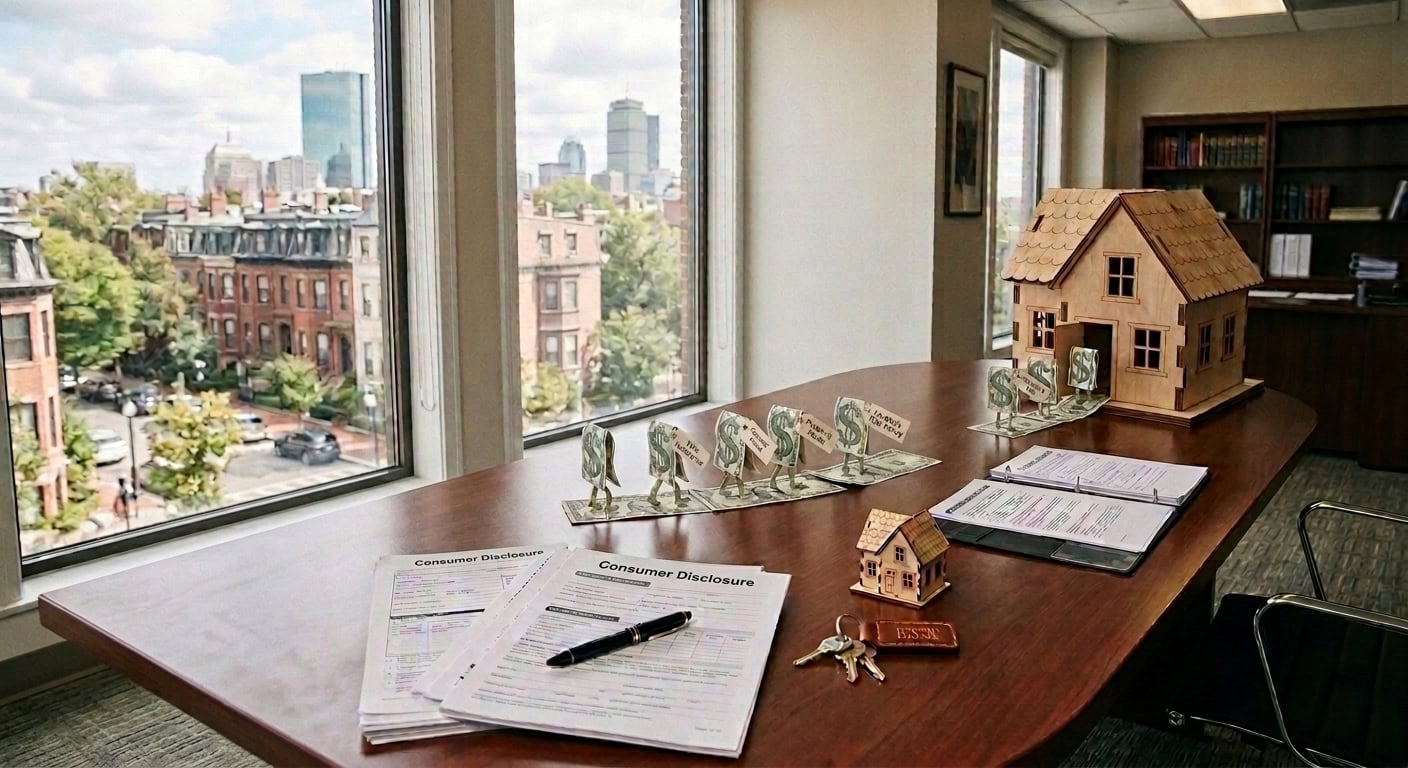
Boston buyer reviewing closing costs in MA and purchase timeline with a real estate agent
a real estate agent walking a young couple through a purchase timeline on a laptop at a kitchen

If you’re trying to figure out what closing costs in MA will actually look like for a specific property you’re considering, a free, confidential consultation with Juan Murray can walk through the real numbers before you write an offer. Schedule your consultation with Juan Real Estate Group and get straight answers instead of a rough national estimate.