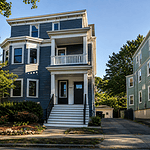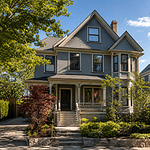
New development in Jamaica Plain generally supports your home’s resale value rather than hurting it, because nearly all of the current construction is rental housing that does not appear as a comparable sale on your appraisal. What new development means for your Jamaica Plain home’s value comes down to two things: added transit-driven buyer demand near projects like Forest Hills Station, and a pricing conversation that has almost nothing to do with the cranes on Washington Street and almost everything to do with condition, condo fees, and how your home is priced against what actually sold last month.
TL;DR
- Active Jamaica Plain projects, including a 48-unit building at 294 Hyde Park Avenue and a 252-unit development next to Forest Hills Station, are rental housing, not homes that compete with your single-family or multi-family listing.
- Appraisers pull comps from recent single-family, two-family, and three-family sales nearby, not from new apartment buildings, so this construction does not dilute your comparable sales pool.
- Transit-oriented development tends to add retail, foot traffic, and buyer demand around Orange Line stops, which typically supports values on existing housing stock rather than competing against it.
- Condo owners, especially in newer or amenity-heavy buildings, face a different calculus, since added rental supply can soften rents and pricing in that specific submarket over time.
- Timing a sale around construction should be based on your personal timeline and proximity to the actual site, not a bet on when a project finishes.
- A comparative market analysis built on real MLS data catches these neighborhood-specific nuances that a generic online estimate misses entirely.
If you own a home in Jamaica Plain in 2026, you’ve probably driven past the fencing on Hyde Park Avenue, the site work near Forest Hills Station, or the scaffolding around the former Blessed Sacrament church in Hyde Square and wondered what it means for your own property. It’s a fair question. Multiple large residential projects are moving through construction simultaneously right now, and that kind of visible activity naturally makes homeowners nervous about oversupply.
The short version: it’s mostly good news, with a few specific exceptions worth understanding before you list. At Juan Real Estate Group, we get some version of this question constantly from Jamaica Plain sellers, and the answer changes depending on whether you own a single-family, a triple-decker, or a condo. This guide breaks down exactly what’s under construction, how it actually affects your comps, and how to think about timing a sale around a neighborhood that’s visibly in motion.
What Is Actually Being Built in Jamaica Plain Right Now?
Jamaica Plain currently has several large residential projects under construction or recently approved, and every one of them is rental housing rather than homes for sale. That distinction is the single most important fact for understanding what new development means for your Jamaica Plain home’s value, because rental buildings never show up as comparable sales when an appraiser or buyer’s agent prices your property.
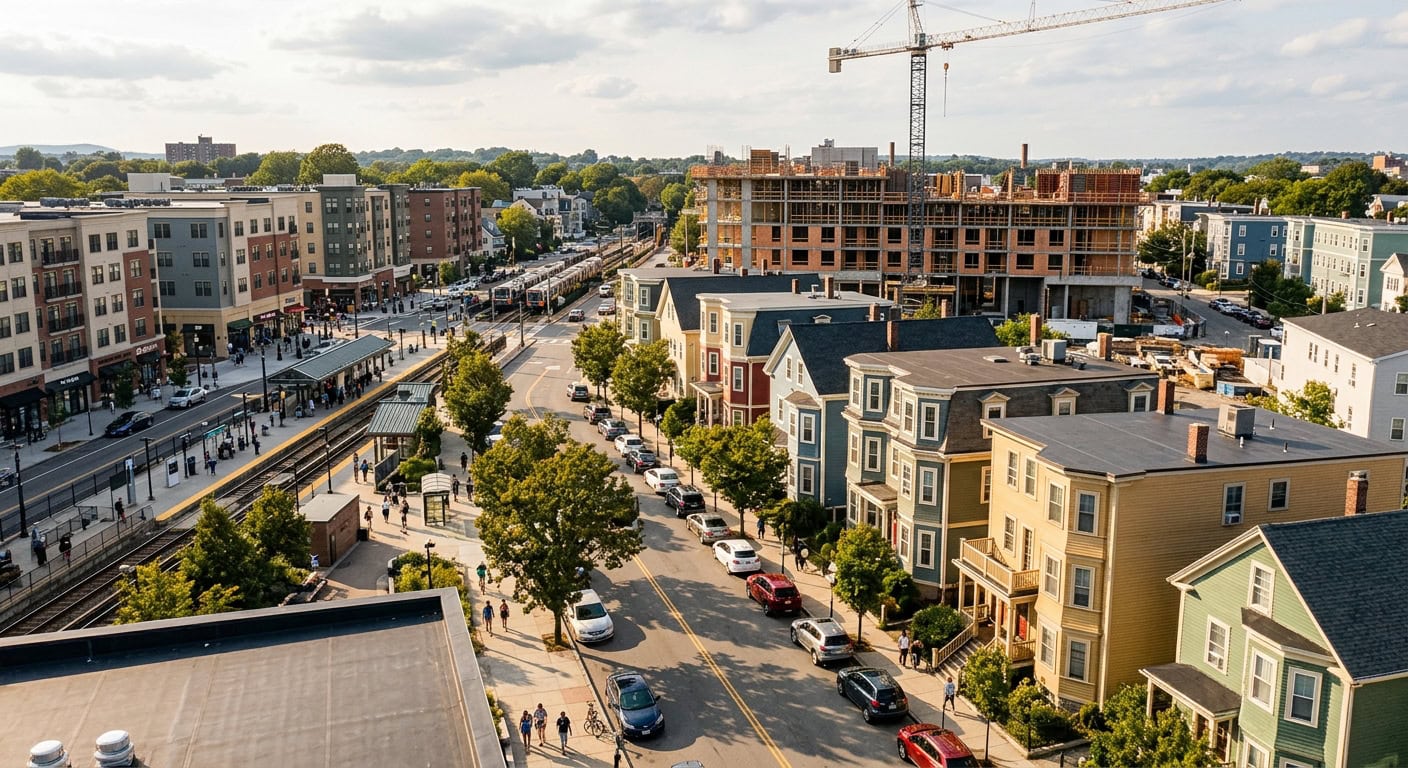
The 294 Hyde Park Avenue project is converting a long-vacant auto parts store site into a six-story, 48-unit apartment building, with the majority of units income-restricted across several affordability tiers. Both Boston’s Zoning Board of Appeals and Planning Board have approved the project. Near Forest Hills Station, a 252-unit development is underway with roughly one-fifth of units set aside as affordable and ground-floor retail included, sitting directly at the Orange Line stop.
In Hyde Square, the former Blessed Sacrament church is being converted into 55 units of affordable housing plus a community performance space, with construction expected to run through late 2027. Beyond these specific sites, the city’s long-range PLAN: JP/ROX framework has studied the broader Washington Street corridor between Forest Hills and Jackson Square for years, envisioning additional housing phased in over time rather than delivered all at once.

Does New Construction Compete With Your Home as a Comparable Sale?
New construction in Jamaica Plain does not compete with your home as a comparable sale, because appraisers and buyer’s agents pull comps from recently sold properties of the same type, not from new rental buildings. An appraiser valuing your triple-decker looks at other triple-deckers, two-families, and single-families that closed nearby in the last few months, full stop.
This is where a lot of seller anxiety gets misdirected. A 252-unit rental building next to Forest Hills Station simply isn’t in the same asset class as your owner-occupied two-family on Amory Street or your single-family near Pondside. Buyers shopping for a home to purchase and buyers shopping for an apartment to rent are rarely the same buyer pool, and appraisal methodology reflects that separation.
What large-scale rental construction does instead is add demand pressure to the surrounding area. Transit-oriented development near an Orange Line stop typically brings more retail, more foot traffic, and more people who want to live within walking distance of the T, according to patterns documented in Boston’s own planning processes around station-area development. That’s upward pressure on everything already standing nearby, your home included, not downward pressure from competition.
How Does New Development Affect Jamaica Plain Condo Values Differently?
Condo owners face a genuinely different set of considerations than single-family or multi-family owners when new rental supply comes online nearby. A newer or amenity-heavy condo unit competes for some of the same renter and buyer pool that new rental buildings target, which single-family and triple-decker owners generally don’t have to worry about.
Added rental supply can soften rents in a specific submarket over time, and if your condo building competes directly with new inventory for the same type of tenant or buyer, that’s worth a focused conversation rather than a generic assumption that “new construction helps everyone.” A building with high condo fees and amenities similar to what’s coming online at 294 Hyde Park Avenue or near Forest Hills Station may see softer demand than a converted triple-decker condo with lower fees and more character.
This is exactly the kind of building-specific and unit-specific nuance a proper comparative market analysis is built to catch, and that a generic online estimate misses entirely. If you’re weighing whether to list your Jamaica Plain condo this year, it’s worth reviewing our guide on selling a condo in Boston for the specific factors that move condo pricing differently than single-family or multi-family properties.
What Do Absorption Rates Tell You About Timing a Sale in Jamaica Plain?
Absorption rate, meaning how quickly homes go under agreement relative to how many are on the market, is a far more reliable indicator of Jamaica Plain conditions in 2026 than the visible presence of construction cranes. Inventory in Jamaica Plain has been running lean, and well-priced homes across property types have continued going under agreement quickly while overpriced listings sit.
That gap between fast-moving and stalled listings has almost nothing to do with construction activity a few blocks away and almost everything to do with how a home is priced and presented at listing. A triple-decker priced against last quarter’s comps, with clean systems documentation and a realistic condo fee (if applicable), moves. One priced on hope, or on what a neighbor claimed their house sold for two years ago, sits.
New apartment buildings under construction a few blocks from your listing aren’t going to change that math in the near term, because absorption is driven by pricing strategy and buyer competition for existing housing stock, not by rental supply. If your listing has been sitting longer than expected, the fix is almost always pricing and positioning, not waiting for a nearby project to finish.

Should You Sell Now or Wait for Construction to Finish?
Whether to sell now or wait for a nearby project to finish depends on your personal timeline and proximity to the construction site, not on a bet about future market conditions. Sellers who wait two or three years hoping for a “finished” neighborhood are often trading a real, current opportunity for a hypothetical future one that may not materialize on the schedule they expect.
A few factors genuinely matter when weighing this decision:
- Your actual timeline. If you need to move within the next year, waiting for the Blessed Sacrament conversion or the Forest Hills project to wrap construction through 2027 isn’t realistic. Sell on your timeline, not the construction schedule.
- Proximity to the active site. A home three or four blocks from Forest Hills Station experiences this very differently than one directly across the street from an active construction zone. This is genuinely block-by-block, not neighborhood-wide.
- Whether renovation dollars make sense first. If you’re weighing updates before listing, understand where those dollars actually create resale upside in a neighborhood that’s shifting, rather than guessing. Our team at Juan Real Estate Group regularly walks Jamaica Plain owners through this exact decision before they commit to a renovation budget.
- Your property type. Condo owners should weigh submarket-specific rental competition; single-family and multi-family owners generally should not let construction timelines drive their listing date at all.
If you’re a triple-decker owner sitting on unused basement or attic space, this is also a reasonable moment to ask whether an ADU or value-add strategy makes more sense than an immediate sale. Rising transit-area demand can make an additional rental unit pencil out better than it did five years ago, though the true return depends heavily on your specific zoning district and renovation costs, which is exactly the kind of analysis worth confirming before committing capital.
Data and Comps: What the Numbers Actually Show
Comparing property types side by side clarifies why new rental construction affects sellers so differently depending on what you own. The table below summarizes how each ownership type should think about the current wave of Jamaica Plain development.
| Property Type | Direct Comp Impact | Demand Effect | Key Consideration |
|---|---|---|---|
| Single-family home | None (new construction is rental, not for-sale) | Generally positive from added transit and retail demand | Focus pricing on recent single-family comps, not construction proximity |
| Two-family or triple-decker | None (different asset class than new apartment buildings) | Generally positive; rental income potential may rise near transit | Consider ADU or unit conversion upside near Orange Line access |
| Condo (older, converted building) | Minimal, unless directly competing for same renter/buyer pool | Mostly neutral to positive | Lower fees can be a competitive edge over new-build rentals |
| Condo (newer, amenity-heavy) | Possible softening if competing with new rental supply | Mixed; depends on specific submarket | Get a building-specific CMA before listing |
Notice that the two categories facing real uncertainty both involve condos, not single-family or multi-family properties. That’s a pattern we see repeatedly across Jamaica Plain, Roslindale, and Hyde Park: owners of traditional housing stock worry about construction far more than the data justifies, while condo owners in newer buildings often underestimate how much submarket-specific rental competition matters.
What Mistakes Do Jamaica Plain Sellers Make When New Construction Is Nearby?
The most common mistake is assuming visible construction activity automatically means either a market flood or a future windfall, when in reality it usually means neither. Sellers either panic and underprice out of fear the neighborhood is “changing too fast,” or they overprice while waiting for a finished project to justify a number the current market won’t support.
A second common mistake is confusing a neighborhood-level planning study, like the Washington Street corridor work under PLAN: JP/ROX, with immediate new supply. Long-range planning documents describe what could happen over a decade, not what’s landing on the market this year. Treating a planning framework as current inventory is a real pricing mistake we see even experienced owners make.
A third mistake, specific to condo owners, is skipping a building-specific pricing review and instead relying on a citywide or neighborhood-wide average. Two buildings three blocks apart in Jamaica Plain can have meaningfully different fee structures, unit mixes, and exposure to new rental competition. Generic online estimates simply can’t account for that granularity, which is why we lean on real MLS comps and a proper comparative market analysis for every seller consultation.
How Does This Fit Into the Broader Boston Market in 2026?
Boston’s broader 2026 housing market context matters here too. With a notable share of Boston buyers reportedly waiting for mortgage rates to drop before committing to a purchase, demand for existing housing stock near new transit-oriented development has stayed resilient, since buyers priced out of brand-new construction often turn to well-located existing homes instead. That dynamic works in favor of Jamaica Plain single-family and multi-family owners specifically.
Massachusetts sellers also need to factor in the state’s ban on inspection waivers that took effect in October 2025, which changes how buyers structure competitive offers on existing homes, including yours. If you’re navigating a sale timeline that overlaps with nearby construction, it’s worth pairing your pricing strategy conversation with an understanding of how that inspection rule shifts buyer behavior; our breakdown on the appraisal process is a useful companion read, comparing home appraisal vs home inspection differences that matter more now that waivers are off the table.
As Danielle O’Brien, broker/owner of Parkway Real Estate in West Roxbury, Mass., has noted in discussing the distinction, appraisals and inspections serve entirely different purposes in a transaction, and conflating the two is a common seller mistake, especially in a market where buyer strategy is shifting under new rules.
Practical Guidance: How to Approach Your Sale Timeline
Start by separating what you can control from what you can’t. You can’t control when the Forest Hills project finishes or how quickly Blessed Sacrama Sacrament’s units lease up. You can control your pricing strategy, your listing condition, and your timing relative to your own life circumstances.
- Get a building- or block-specific CMA rather than relying on a citywide average or an automated estimate that can’t account for your exact street, unit type, or condo fee structure.
- Don’t wait on construction completion unless your personal timeline genuinely allows for a multi-year delay; Blessed Sacrament alone isn’t expected to finish before late 2027.
- Ask a direct question about proximity if you’re within a block or two of active construction. Showings during heavy construction phases sometimes need a slightly different marketing approach, and that’s a conversation worth having before you list, not after an offer falls through.
- If you own a rental property with tenants and you’re weighing a sale during this window, review the specific Massachusetts rules before you list; our guide on multifamily properties with unpermitted units covers a related compliance issue that surfaces often in Jamaica Plain triple-deckers.
- If you’re considering a value-add project instead of selling, get realistic zoning and cost guidance before committing capital, since ADU rules and true renovation costs vary block to block in this market.

Frequently Asked Questions
Does new construction in Jamaica Plain lower my home’s value?
No, new construction in Jamaica Plain typically does not lower existing home values, because current projects are rental housing that doesn’t appear as a comparable sale against your single-family, two-family, or three-family property. In most cases, transit-oriented rental development supports demand for surrounding housing stock instead.
Will the 252-unit development near Forest Hills Station affect my home’s appraisal?
An appraisal on your home won’t include the Forest Hills development as a comparable sale, since appraisers pull comps from recently sold properties of the same type as yours, not new rental buildings. The project may support neighborhood demand over time through added transit access and retail.
Should condo owners in Jamaica Plain be more concerned about new construction than single-family owners?
Condo owners, particularly in newer or amenity-heavy buildings, should pay closer attention than single-family owners, since new rental supply can compete for the same tenant or buyer pool. A building-specific comparative market analysis is the right tool to evaluate that risk before listing.
How long will construction near Blessed Sacrament and Forest Hills Station take?
Construction on the Blessed Sacrament conversion in Hyde Square is expected to run through late 2027, while the timeline for the Forest Hills Station development depends on its specific construction phase. Sellers with a shorter personal timeline shouldn’t delay a listing waiting for either project to finish.
Is it better to sell my Jamaica Plain home now or wait until nearby construction finishes?
The right timing depends on your personal circumstances and proximity to the active site, not on construction schedules. Homes several blocks from a project generally show and sell normally; homes directly adjacent to active construction may need adjusted marketing during the busiest build phases.
Does the Washington Street corridor planning study mean hundreds of new homes are coming soon?
Not immediately. The city’s PLAN: JP/ROX framework studies long-range possibilities for the Washington Street corridor over a much longer horizon, and it should not be confused with current inventory hitting the market this year or next.
How does new construction affect ADU or value-add strategies for single-family homeowners in Jamaica Plain?
Rising transit-area demand near projects like Forest Hills Station can improve the return on an ADU or additional rental unit for single-family owners, though the actual return depends heavily on your specific zoning district and true renovation costs. A local cost and ROI review before committing capital is the safest first step.
Final Take on New Development and Your Home’s Value
What new development means for your Jamaica Plain home’s value, in plain terms, is more support than threat for single-family and multi-family owners, and a nuanced, building-specific question for condo owners. The 294 Hyde Park Avenue building, the Forest Hills Station project, and the Blessed Sacrament conversion are all rental housing that adds transit-driven demand without directly competing against your property on a comp sheet.
The pricing decisions that actually move your outcome, absorption rate, condition, condo fee structure, and how your listing compares to what sold last month, have almost nothing to do with the cranes down the street. As Jamaica Plain continues evolving through 2026 and into the coming years, sellers who anchor their strategy in real MLS data rather than construction-driven speculation will consistently outperform those guessing based on what they see out the window.

If you’re trying to figure out what new development means for your specific Jamaica Plain property, whether it’s a triple-decker near Hyde Square or a condo close to Forest Hills Station, a confidential conversation with Juan Murray can clarify the real numbers before you commit to anything. Schedule a free consultation with Juan Real Estate Group to get a pricing strategy built on actual MLS comps for your block, not a generic online estimate.