Should you sell your Boston home now or wait until rates drop?
For most sellers in Jamaica Plain, Roslindale, Hyde Park, Dorchester, and Roxbury, the spring 2026 market rewards correctly priced homes with fast sales and, in many cases, multiple offers. Well-priced homes in these neighborhoods are clearing in 17 to 32 days. Mortgage rates in Massachusetts are stabilizing in the 6.19% to 6.75% range, and major forecasters do not anticipate a dramatic drop in the near term. If your home is priced right and you have a life reason to sell, waiting for rates to fall is likely to cost you the best selling season of the year.
It is a question I hear from sellers across Jamaica Plain, Roslindale, Hyde Park, and Dorchester almost every week right now: “Should I sell this spring or keep waiting for rates to go down?”
The anxiety is real. Many homeowners are sitting on mortgages at 2.5% to 3%, locked in before the rate environment changed, and the idea of giving that up feels financially painful. You are not alone in feeling that way.
But the spring 2026 data in Greater Boston is worth a close look before you make that call.
What the Boston Market Is Actually Doing Right Now
The spring selling season is historically the strongest window for Boston sellers, and 2026 is holding to that pattern, with important distinctions.
The median single-family home price in Boston is approximately $857,000 heading into mid-spring 2026. In Jamaica Plain, the median sale price is around $780,000, with homes selling in about 24 to 30 days. In Roslindale, the median sits near $719,000, with average days on market in a similar range. Inventory across Jamaica Plain remains under one month of supply, which means sellers still hold real leverage in this market.
The crucial split, however, is between well-priced homes and overpriced ones. Well-priced homes in Jamaica Plain, Roslindale, and Hyde Park are going under agreement in 17 to 32 days, often with multiple offers. Homes priced above what buyers are currently willing to pay are sitting on the market for 50 or more days, and most need a price reduction before they sell.
According to April 2026 data for Greater Boston, 34.5% of listings have had price drops, up from 29.0% the year before. That number tells you something important. Sellers who overpriced at listing paid for it in longer timelines, reduced final sale prices, and more negotiating pressure from buyers who spotted the stale listing.
The Rate Lock-In Effect: Real, But Its Grip Is Loosening
The “rate lock-in effect” has been discussed widely in 2026 for good reason. Boston-area homeowners who secured mortgages at 2.5% to 3% during 2020 to 2022 face a genuine financial trade-off when they sell and buy again. Trading a sub-3% rate for 6.5% on a replacement home is a real cost, and it has kept a meaningful portion of potential sellers on the sidelines.
But analysts studying this trend in Greater Boston are noting that the grip is loosening in 2026. Life continues: job changes, family growth, aging parents, retirement decisions, and the need to access equity do not pause for the interest rate environment. The sellers who are moving forward are doing so because their life situation requires it, not because they found a perfect rate window.
Mortgage rates in Massachusetts are currently running 6.19% to 6.75% on a 30-year fixed. Major forecasters do not anticipate a return to sub-5% rates in the near term. Most analysts expect only gradual easing through 2027 at best. If you are waiting for a dramatic rate drop to unlock your move, the data suggests that window may not open on the timeline you are hoping for.
There is a more practical frame for this decision: what does waiting actually cost you? If you miss the spring selling window, historically the single best window of the year for Boston properties, that timing cost is meaningful. April is the fastest month to sell in Massachusetts, with homes averaging 25 days on market citywide. May consistently produces the highest median prices, with a premium of roughly 3% to 6% above the annual average.
The Case for Selling Now
Several factors favor sellers who are ready to move this spring.
The spring window is open right now. You are in the optimal period for Boston real estate. Well-prepared, correctly priced homes in Jamaica Plain, Roslindale, and Hyde Park are getting strong buyer attention. That attention fades through the summer months and drops significantly in the fall.
Buyer demand is real and active. Rates stabilizing in the 6% range have shifted buyer psychology. Buyers who spent 2023 and 2024 waiting for a dramatic rate drop are now moving forward with their searches. Pre-approvals and buyer activity are up compared to earlier in the year.
Inventory remains thin. Despite modest increases in some Boston neighborhoods, supply across Jamaica Plain, Hyde Park, and Roslindale remains under 1 month. That constraint protects sellers who price correctly.
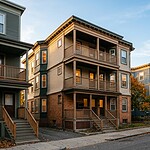
You have equity. Homeowners across these neighborhoods have seen significant appreciation over the last five to eight years. If you purchased your Jamaica Plain triple-decker or Roslindale single-family before 2020, your equity position is strong. Whether to access that equity now versus later is a financial planning conversation worth having.
If you are thinking about what comes next after a sale, The Boston Move-Up Dilemma walks through several strategies for buyers who need to coordinate a sale and a purchase simultaneously.
The Case for Waiting
Waiting makes sense in specific situations, and it is worth naming them honestly.
If your home needs significant work before it can show competitively, rushing to list before it is ready will hurt you more than waiting. A home that hits the market in late spring or early fall, well-prepared, will outperform an overhasty listing that is not ready for buyers.
If you have no compelling life reason to sell in 2026, and you are purely trying to time the market for maximum gain, patience is a legitimate strategy. Greater Boston home prices are forecast to grow 2.5% to 4% through 2026 and into 2027. Appreciation is slower than it was from 2021 to 2023, but it remains positive.
If your situation involves downsizing, it is worth modeling the financial scenarios before you decide. Should I Sell My Boston Home to Downsize in 2026? walks through several of those scenarios with real numbers.
What rarely makes sense is waiting indefinitely for rates to drop to a specific number. That approach turns a real estate decision into a bet on monetary policy, which has not rewarded Boston homeowners well in the past two years.
Pricing Is the Deciding Variable
Here is what I have observed consistently across 32 years and hundreds of transactions in Greater Boston: the decision to sell now or wait matters far less than the decision of what to price your home at when you do list.
Overpriced homes in spring 2026 are being punished fast. Buyers have more options than they have had in several years. When a listing sits for three weeks without strong activity, buyers start to assume something is wrong with it. A price reduction after 30 to 45 days on the market often results in a final sales price below what a correct price would have generated on day one.
The most valuable step you can take right now, regardless of when you plan to list, is to get a current, accurate market analysis of your home from someone who knows Jamaica Plain, Roslindale, Hyde Park, Dorchester, and Roxbury at the transaction level. A Comparative Market Analysis (CMA) from a local agent who has closed deals in your specific neighborhood tells you what buyers are actually paying for homes like yours right now, not what Zillow estimates or what your neighbor got last year.
That number, grounded in current data, is the foundation of any sound timing decision.
Frequently Asked Questions
Is spring 2026 a good time to sell a home in Boston?
For correctly priced homes, yes. April is historically the fastest month to sell in Massachusetts, and May produces the highest median prices, typically 3% to 6% above the annual average. In Jamaica Plain and Roslindale, well-priced homes are selling in 17 to 32 days this spring. Overpriced homes are sitting on the market for 50 or more days. Pricing discipline determines the outcome far more than the month of the year.
What happens to Boston home prices if I wait until fall to sell?
Fall sales in Boston tend to move more slowly and generate slightly lower prices than in spring. Greater Boston home values are forecast to appreciate 2.5% to 4% through 2026, so waiting does not mean losing value. But it likely means missing the highest-demand selling window of the year. September and October can still yield solid results for well-prepared sellers, but spring has historically been the strongest season.
How does the rate lock-in effect affect sellers in Jamaica Plain and Roslindale?
The rate lock-in effect describes homeowners who secured mortgages at 2.5% to 3% and are reluctant to sell because they would trade that rate for today’s 6.19% to 6.75% range on a replacement home. This has kept some sellers on the sidelines across Greater Boston. Analysts note the effect is loosening in 2026 as life events, equity needs, and changing circumstances outweigh the desire to hold a low rate indefinitely.
How long are homes sitting on the market in Jamaica Plain right now?
In Jamaica Plain, the average days on market are approximately 24 to 30 days as of spring 2026. Well-priced, well-prepared homes are going under agreement in 17 to 32 days, sometimes faster with multiple offers. Homes priced above market are sitting for 50 or more days and typically require a price reduction to generate serious buyer interest.
Should I wait for mortgage rates to drop before selling my Boston home?
Most forecasters do not anticipate a dramatic drop in mortgage rates in the near term. Massachusetts rates are currently running 6.19% to 6.75%, and gradual easing is expected through 2027 at best. Waiting for a specific rate target to unlock your move turns a real estate decision into a bet on monetary policy. If you have a life reason to sell, the spring 2026 market is favorable for correctly priced homes.
The Boston market in spring 2026 is not the frenzied seller’s market of 2021 to 2022, but it is not a buyer’s market either. It is a market that rewards preparation and pricing discipline and punishes overconfidence. If your home is ready and priced right, now is a strong window to sell. If it is not, a few months of preparation could matter more than the timing of your listing date.
If you are ready to find out what your home is actually worth in today’s market and what you would walk away with after costs, I would love to sit down with you. My consultations are private, confidential, and completely no-pressure. Schedule a conversation, and we will go through the numbers together.