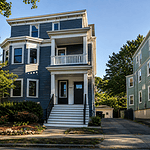
Selling a multi-family home in Boston requires more preparation than a standard single-family sale. Sellers must address tenant rights under Massachusetts law, transfer security deposits to the buyer at closing, prepare rent roll documentation, and coordinate showings around occupied units. In Jamaica Plain, Roslindale, Hyde Park, and Dorchester, where two-families and triple-deckers define the housing stock, a well-prepared multi-family sale can command a significant premium over a rushed, underprepared one.
What Do Sellers Need to Know When Selling a Two-Family or Three-Family Home in Boston?
If you own a two-family, three-family, or triple-decker in Jamaica Plain, Roslindale, Hyde Park, or Dorchester, you’re sitting on one of the most in-demand asset classes in Greater Boston. Buyers are actively competing for income-producing properties near the Orange Line and in walkable neighborhoods across Suffolk County. But selling a multi-family property is not the same as selling a single-family property. The process has additional layers, the documentation requirements are more involved, and the decisions you make in the months before you list will directly affect what you walk away with at closing. For a full breakdown of closing costs on a multi-family sale, see how much you’ll net selling your home in Boston. And if you’ve owned the property for years and taken depreciation as a landlord, review Massachusetts capital gains tax and depreciation recapture with your accountant before you list — this is a conversation worth having before you commit to a date.
Your Tenants: The Most Important Variable
The single factor that shapes everything else in a multi-family sale is who’s living there and on what terms. In Massachusetts, a tenant’s lease does not end because you sell. The new owner inherits whatever tenancy agreements are in place. That’s a key distinction that surprises many sellers, and it influences your buyer pool, timeline, and pricing strategy.
Tenancy at will (month-to-month). In Massachusetts, you can terminate a tenancy at will with at least 30 days’ written notice, or one full rental period, whichever is longer. This gives you more flexibility if you want to deliver a vacant unit to the buyer.
Fixed-term lease. If your tenant has a signed lease, that lease runs with the property. The new owner must honor it until the end of the term. You can negotiate with a tenant to leave early, but you cannot unilaterally break a valid lease.
Cash for keys. A negotiated arrangement in which the seller or the buyer offers a tenant a financial incentive — often $3,000 to $7,000 — to vacate by a specified date. It’s legal, common in Boston, and often the most practical solution when a seller wants to deliver a vacant unit.
Security deposits. At closing, you must transfer any held security deposits, along with accrued interest, to the buyer. Massachusetts law requires security deposits to be held in a separate, interest-bearing account. If you are not currently in compliance, get your real estate attorney involved early.
Who’s Buying Your Multi-Family (and Why That Changes Your Strategy)
Owner-occupants plan to live in one unit and rent out the others. This group has access to owner-occupant financing, which typically requires as little as 5% down on a two-family and 10% on a three-family, compared to the 20% to 25% typically required for investor loans. Owner-occupants can often pay more than investors while still making the numbers work. A vacant unit is often a selling point for this buyer.
Investors are buying for the return. They will underwrite your property based on the rent roll, gross rent multiplier, and condition. A building with leases in place at market rents is attractive because there is no vacancy risk from day one. Cash investors move faster and do not have financing contingencies. Most listings in Jamaica Plain, Roslindale, Hyde Park, and Dorchester attract both buyer types. How you price, position, and prepare the property will determine which group responds most strongly.
The Documentation You’ll Need Before You List
- Rent roll. A simple document showing each unit, the current monthly rent, lease type, and lease end date if applicable.
- Copies of all leases and tenancy agreements. For any fixed-term lease, the buyer’s lender and attorney will review this document.
- Security deposit accounting. The amount held for each tenant, the bank account details, and accrued interest calculations.
- Recent expense records. Utility costs, repair invoices, insurance premiums, and property tax bills for the last one to two years.
- Smoke and CO detector certificate. Required before any property sale closes in Massachusetts. Schedule the inspection through the Boston Fire Department at least a week or two in advance.
- Lead paint disclosure documentation. Most two-family and triple-decker homes in these neighborhoods were built before 1978. Sellers of pre-1978 properties must complete the Property Transfer Lead Paint Notification form before the Purchase and Sale Agreement is signed.
- Permitted work documentation. Include permits and certificates of occupancy for any permitted work done on the property.
A Note on Tenants With Rental Assistance
If any of your tenants receive housing vouchers or rental assistance, the sale process has additional considerations around notifying relevant agencies and ensuring the buyer is prepared to accept the voucher. Your attorney should be involved early in these cases. For a detailed look at all the legal dimensions of selling a property with tenants in place — including Section 8 vouchers, eviction timelines, and notice requirements — see selling a rental property with tenants in Massachusetts.
A Few Other Things Worth Knowing
Showing occupied units. You cannot show occupied units without giving tenants reasonable advance notice. Building a cooperative relationship with your tenants before you list makes showings significantly easier.
Frequently Asked Questions
Can I sell my two-family in Boston while tenants are still living there?
Yes. In Massachusetts, a property sale does not terminate a tenancy. If your tenants have a fixed-term lease, the new owner inherits that lease and must honor it. If they are on a month-to-month tenancy, the new owner takes over that relationship as well. Sellers who want to deliver vacant units typically negotiate a cash-for-keys arrangement or time their listing to coincide with the end of a lease term.
Do I have to tell buyers about lead paint in my multi-family?
Yes. Under Massachusetts and federal law, if your property was built before 1978, you must complete the Property Transfer Lead Paint Notification form before signing the Purchase and Sale Agreement. This form must be signed by the seller, the buyer, and any real estate agents involved. Failure to comply can result in civil and federal penalties.
What documentation does a buyer need to see for a multi-family in Boston?
Buyers and their lenders typically request the current rent roll, copies of all leases or tenancy agreements, security deposit records, recent expense statements covering utilities, insurance, taxes, and repairs, and documentation of any permitted work. Having these organized before you list speeds up the due diligence process and signals that you have managed the property well.
Do I need to give tenants notice when I am selling my home in Massachusetts?
Massachusetts does not require you to give tenants advance written notice that you are listing the property for sale. However, tenants have the right to reasonable advance notice before showings. It is good practice to communicate openly with tenants about the sale even when the law does not require it.
What is a reasonable price for a two-family or three-family in Jamaica Plain right now?
Pricing depends on the rent roll, condition, unit mix, and whether units are vacant or occupied. The right number for your property requires a comparative market analysis looking at recent sales of similar income-producing properties in Jamaica Plain, Roslindale, and surrounding neighborhoods.
Have questions? Let’s connect.
About Juan Murray
Juan Murray is a Boston broker associate with more than 30 years of experience helping buyers, sellers, and investors across Greater Boston, personally leading every transaction from the first conversation through closing.
RE/MAX Real Estate Center · (617) 721-0961
Equal Housing Opportunity. Juan Murray is licensed as a Broker in Massachusetts, regulated by the Massachusetts Board of Registration of Real Estate Brokers and Salespersons. This article is general information only and does not constitute legal, tax, or financial advice. Confirm your specific costs and obligations with your closing agent, tax advisor, or lender.