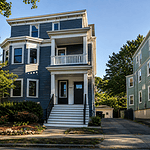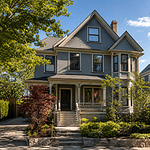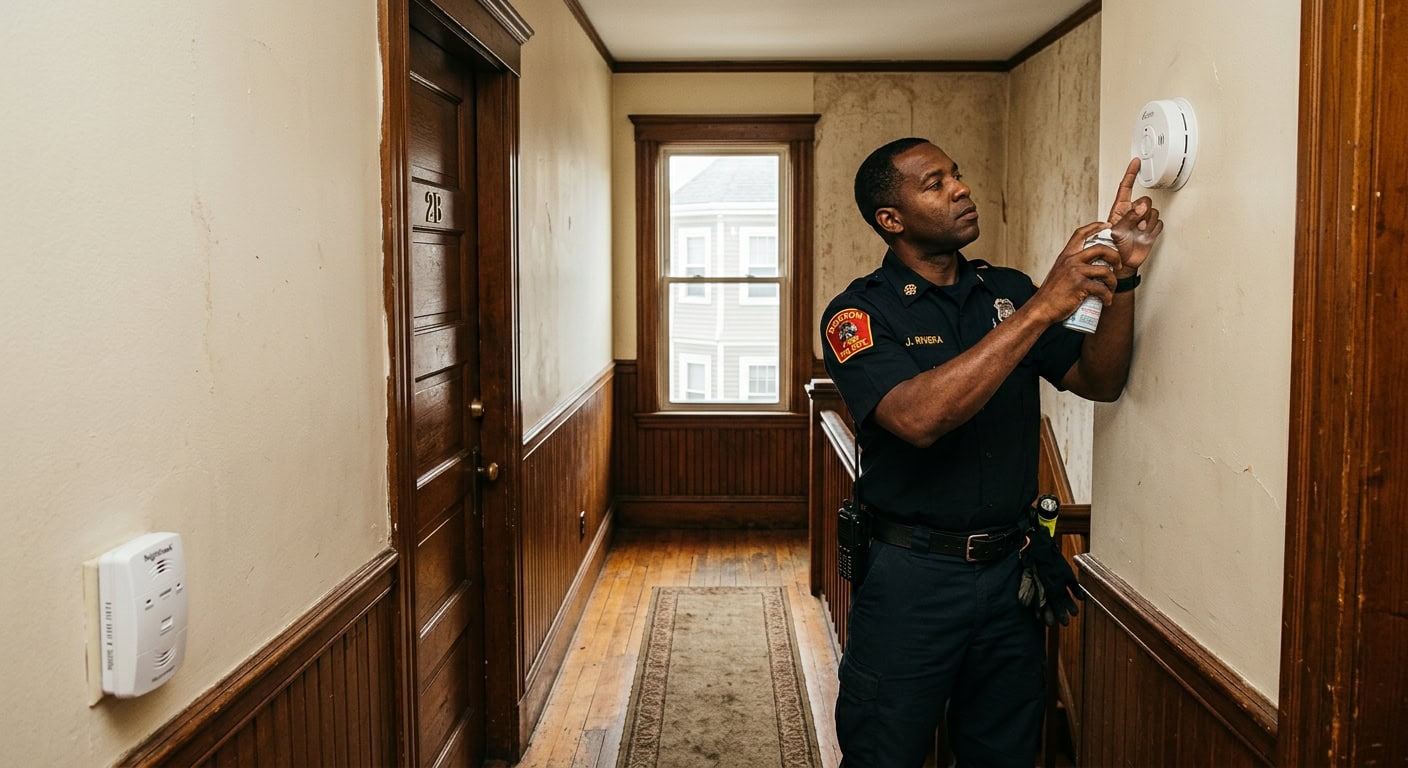
Massachusetts law requires every residential home seller to obtain a fire department Certificate of Compliance confirming that smoke and carbon monoxide detectors are properly installed and working before the property can close. In Boston, this means scheduling an inspection with the Boston Fire Department at least 10 business days in advance. Without the certificate, your closing attorney cannot finalize the sale.
Does a Massachusetts Home Seller Need a Smoke and CO Detector Certificate?
There’s one requirement in every Massachusetts home sale that surprises sellers more than almost anything else. Not the attorney. Not the tax stamps. Not the lead paint disclosure. It’s the fire department inspection. Before you can close on your home in Boston, Jamaica Plain, Roslindale, Hyde Park, Dorchester, or anywhere else in Massachusetts, you need a Certificate of Compliance from your local fire department confirming that your smoke and carbon monoxide detectors are properly installed and working. No certificate, no closing. This isn’t a recommendation from your agent — it’s Massachusetts law: Chapter 148, Sections 26F and 26F½. For the full picture of what’s required of sellers between accepting an offer and handing over the keys, see what happens after you accept an offer in Massachusetts. For the complete list of seller closing costs this sits alongside, see how much you’ll net selling your home in Boston.
What the Law Actually Requires
Massachusetts has two separate inspection requirements when you sell. The first, under MGL Chapter 148 Section 26F, applies to residential properties built before 1975 with one to five dwelling units. The second, under Section 26F½, applies to every residential property regardless of when it was built or how many units it has. In practice, every home sale in Massachusetts requires a fire department inspection for both smoke and CO detectors. The certificate is valid for six months. If your closing gets delayed past that window, you’ll need a new one.
The Boston Timeline: Plan for at Least Two Weeks
The most common mistake sellers make is waiting too long to schedule the inspection. In Boston, the Fire Department requires a minimum of 10 business days advance notice, not counting weekends or holidays. Inspections are scheduled on a first-come, first-served basis, and the BFD books up quickly during peak selling season. Schedule your fire inspection as soon as you list the property — don’t wait for an accepted offer. By the time you have a signed Purchase and Sale Agreement, you want that appointment already on the calendar. In Boston, you can apply through the City of Boston’s permitting portal, or contact the Fire Prevention Division directly at smokedetector.bfd@boston.gov or 617-343-3628.
What the Inspector Is Checking
Detector type. Massachusetts requires photoelectric smoke detectors, not ionization-only. Combination detectors (photoelectric plus ionization) are acceptable. Any ionization-only detector must be positioned at least 20 feet from a kitchen or bathroom. If you have ionization-only detectors in the wrong locations, they’ll need to be replaced before you can pass.
Placement. Smoke detectors must be on every level of the home, including the basement and any finished attic, inside or directly outside every bedroom, and at the base of each stairway leading to a floor above. CO detectors must be on every habitable level of the home, especially near bedrooms and fuel-burning appliances. For multi-family homes, common areas including stairwells, shared hallways, and shared basements also need detectors.
Age. Every detector must be less than 10 years old. The manufacturing date is stamped on the back. Check the back of every detector before you schedule the inspection, not after.
Function. The inspector will test each alarm to confirm it activates. Dead batteries and disconnected units are an automatic failure.
What It Costs
The inspection fee is paid to the fire department. In most Massachusetts towns, the cost runs roughly: single-family $50, two-family $100, three to six units $150, seven or more units $500. If the inspection fails, you’ll replace whatever detectors need replacing — typically $20 to $50 each for compliant photoelectric or combination units — and request a re-inspection.
Pre-1978 Homes: What to Expect in Jamaica Plain and Roslindale
Most homes in Jamaica Plain, Roslindale, Hyde Park, Dorchester, and Roxbury were built well before 1975. Battery-powered detectors are permitted in older homes that haven’t been substantially renovated. If your home had a permitted addition or renovation, you may be required to have hardwired detectors with battery backup. If you’re unsure whether your home’s history creates any complexity, contact the BFD before your inspection. A quick call can save you a failed inspection and a rescheduled closing.
The Certificate and Your Closing Attorney
Once the inspection is complete and your home passes, the BFD issues the certificate. You bring it to closing, or your agent sends it directly to your closing attorney before the closing date. Your Massachusetts closing attorney will ask about the certificate as part of their closing checklist. It’s one of those details that should be confirmed in writing well before the scheduled closing date.
Frequently Asked Questions
Is the smoke and CO certificate required for all Massachusetts home sales?
Yes. Massachusetts law requires a Certificate of Compliance for carbon monoxide detectors for every residential sale, regardless of when the property was built. Smoke detector certificates are additionally required for homes built before 1975 with one to five units. In practice, nearly every residential sale in Boston triggers both requirements.
Who is responsible for getting the smoke and CO certificate: the buyer or the seller?
The seller is responsible by default. It’s the seller’s obligation to schedule the fire department inspection, ensure the home passes, and deliver the certificate at closing. Assume it’s yours to handle unless you’ve negotiated otherwise in writing.
What happens if my home fails the fire department inspection?
The inspector will note what failed. Common issues are expired detectors, wrong detector type, improper placement, and dead batteries. You correct the issues, replace what needs replacing, and schedule a re-inspection. A failed first inspection doesn’t have to delay your closing if you’ve built enough lead time into the process.
How far in advance should I schedule the Boston Fire Department inspection?
The BFD requires a minimum of 10 business days advance notice, not counting weekends or holidays. During the spring selling season, the schedule fills quickly. The best practice is to schedule right after you list, before an offer is even accepted.
Does the smoke and CO requirement apply to condos in Massachusetts?
Yes. Condos are subject to the same requirements as single-family homes. Each unit must have properly placed, correctly typed, and recently manufactured smoke and CO detectors. Common areas in multi-unit buildings also require detectors in stairwells, shared hallways, and shared basements.
Have questions? Let’s connect.
About Juan Murray
Juan Murray is a Boston broker associate with more than 30 years of experience helping buyers, sellers, and investors across Greater Boston, personally leading every transaction from the first conversation through closing.
RE/MAX Real Estate Center · (617) 721-0961
Equal Housing Opportunity. Juan Murray is licensed as a Broker in Massachusetts, regulated by the Massachusetts Board of Registration of Real Estate Brokers and Salespersons. This article is general information only and does not constitute legal, tax, or financial advice. Confirm your specific costs and obligations with your closing agent, tax advisor, or lender.