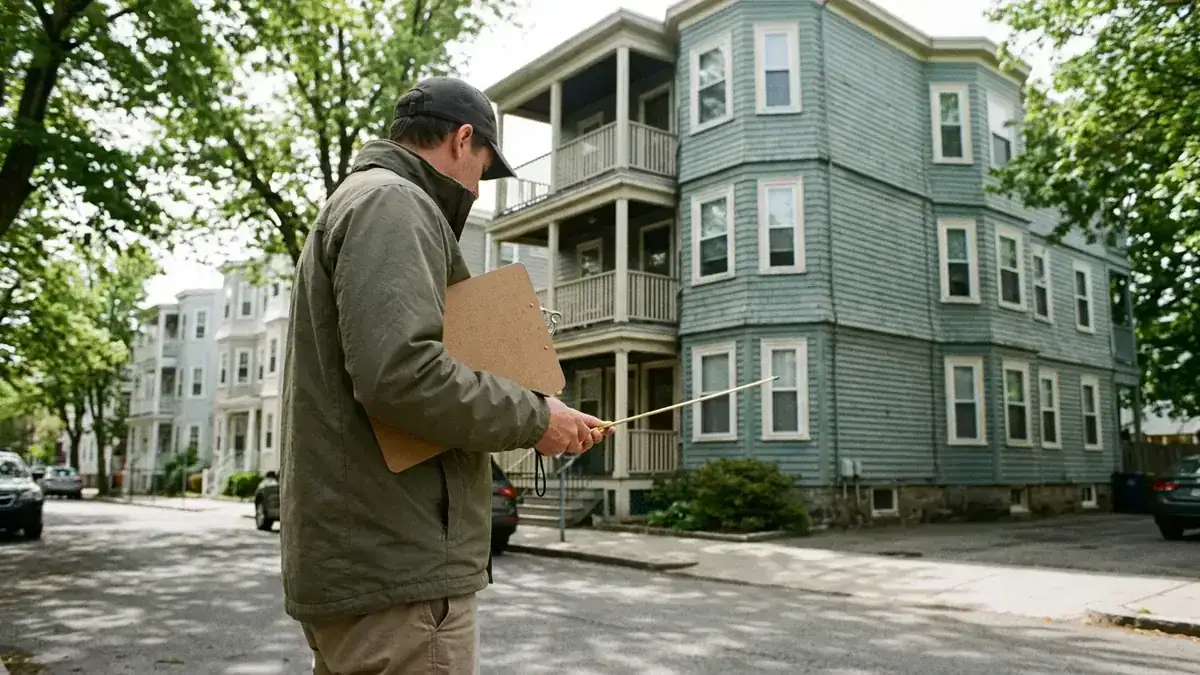
An appraisal tells your lender what a property is worth, while an inspection tells you, the buyer, what condition it’s actually in. Mixing up a home appraisal with a home inspection is one of the most common mistakes among first-time buyers in Jamaica Plain, Roslindale, Hyde Park, Dorchester, and Roxbury, and it can cost you thousands if you skip either. In Massachusetts, the distinction matters even more since 760 CMR 74.00 took effect in October 2025.
Home Appraisal vs Home Inspection: What’s the Difference?
If you’re shopping for a triple-decker in Jamaica Plain or a condo conversion in Roslindale, you’ll run into both processes within days of getting your offer accepted. They sound similar. They are not the same thing, and mixing them up during a Boston closing timeline can cost you leverage, money, or both. For what happens when the appraisal comes back low, see what to do when your Boston home appraises low. For how to navigate the repair negotiation after the inspection, see negotiating repairs after a home inspection in Boston.
A home appraisal is a licensed professional’s estimate of a property’s market value, ordered by your mortgage lender to confirm the home is worth at least the loan amount. A home inspection is a top-to-bottom physical examination of the property’s systems and structure, conducted by the buyer to identify defects before closing. The appraisal answers “what is this worth,” and the inspection answers “what’s wrong with it.” The appraisal report goes to your lender and protects their investment. The inspection report goes to you and protects your decision to buy.
| Comparison | Home Appraisal | Home Inspection |
|---|---|---|
| Primary purpose | Confirms market value for the lender | Assesses physical condition for the buyer |
| Who orders it | The mortgage lender | The buyer, usually through their agent |
| Who typically pays | Buyer, via a fee at or before closing | Buyer, paid directly to the inspector |
| Required or optional | Required on nearly all financed purchases | Optional, but strongly recommended |
| Typical cost (2025-2026) | $314 to $423, national average | ~$411 average in Greater Boston; $350-$650 range |
| What it examines | Comparable sales, condition, location, square footage | Roof, foundation, plumbing, electrical, HVAC, structure |
| Effect if unfavorable | Appraisal gap; buyer covers difference or renegotiates | Repair credits, price reduction, or contingency exit |
What Comes First: Inspection or Appraisal?
The home inspection typically happens first, usually within three to ten days of an accepted offer, while the lender-ordered appraisal follows once your mortgage application is underway. This sequence exists because the inspection contingency deadline in most Massachusetts purchase-and-sale agreements is early, giving you a chance to renegotiate or walk away before you’re financially committed to the loan process.
Home Inspection Costs and What You Pay For
A home inspection in Massachusetts covers a licensed inspector’s fee to examine the roof, foundation, electrical, plumbing, HVAC, windows, and structural components of a property, typically over two to three hours. In Boston specifically, expect to pay around $411 on average as of 2025-2026, notably higher than the national average of roughly $343. That premium reflects Boston’s older housing stock: triple-deckers built between 1900 and 1920 often have legacy systems that require additional time to document properly.
Add-on inspections push the total higher. Radon testing, sewer scope inspections for older triple-deckers, and mold assessments typically add $100 to $300 each. Budget for specialty add-ons upfront rather than deciding mid-inspection, since scheduling a second visit adds days to your timeline.
Massachusetts’ 760 CMR 74.00 and the Inspection Waiver Ban
As of October 2025, Massachusetts regulation 760 CMR 74.00 prohibits sellers from conditioning an accepted offer on a waived inspection in most residential transactions, with narrow exemptions for auctions, foreclosures, certain family transfers, and pre-completion new construction with qualifying warranties. Waived inspections in Greater Boston fell to roughly 12% in 2026, down from 18% the prior year. This means you’re not competing against as many waived offers as buyers were a year or two ago, so keeping your inspection protection is the smarter play for most buyers right now.
Common Red Flags That Cause Low Appraisals
Appraisers don’t fail a home outright; they value it below the agreed purchase price, which creates a financing gap for the buyer to solve. The most common causes across Jamaica Plain and Roslindale deals include outdated kitchens or bathrooms relative to nearby comps, unpermitted additions or unit conversions that can’t be counted toward square footage, visible deferred maintenance, and a scarcity of recent comparable sales in thinly traded pockets of Dorchester or Roxbury.
Major Issues That Surface in Home Inspections
Inspectors don’t technically “pass” or “fail” a home, but certain findings are serious enough to reshape or end a deal entirely. In Boston’s older housing stock, the most common serious findings include active knob and tube wiring still in use, foundation cracks or water intrusion in basement units, roof systems near or past their expected lifespan, undersized or outdated electrical panels, and evidence of past or active mold from moisture issues common in older multi-family conversions.
What to Do If the Appraisal Comes in Low
When a home appraisal comes in below the agreed purchase price, the buyer generally has three options: pay the difference in cash, renegotiate the price with the seller, or challenge the appraisal with additional comparable sales data. Lenders will only finance up to the appraised value, so the gap between the contract price and the appraised value becomes the buyer’s problem to solve unless the seller agrees to close it.
Negotiating After Inspection Results
Negotiating after a home inspection means using the report’s specific findings, not general dissatisfaction, to request repairs, a price reduction, or a closing credit. Request a credit at closing rather than asking the seller to complete repairs themselves, since seller-completed repairs are often done at the lowest possible cost. Prioritize your ask list and get contractor estimates before you negotiate, since a vague range from the inspector won’t hold up against a seller’s counter unless you’ve narrowed it down.
Frequently Asked Questions
What comes first, appraisal or home inspection?
The home inspection typically comes first, usually within three to ten days of an accepted offer, since inspection contingency deadlines fall early in a Massachusetts purchase and sale agreement. The lender-ordered appraisal follows once your mortgage application is underway, generally two to three weeks before closing.
What is the biggest red flag in a home inspection?
The biggest red flags are safety and structural issues, including active knob-and-tube wiring, foundation cracks with water intrusion, an undersized electrical panel, or a roof near the end of its lifespan. These findings carry the highest repair costs and the most negotiating leverage.
How much is an appraisal for a 2,000 sq ft house?
A home appraisal for a roughly 2,000 square foot house typically falls within the national range of $314 to $423 as of 2026, averaging around $357. Multi-family properties or homes with complex layouts, common in Boston’s triple-decker stock, often run toward the higher end of that range.
What will cause a low appraisal?
An appraisal doesn’t technically “fail,” but it can come in below the purchase price due to a lack of comparable sales, visible deferred maintenance, unpermitted additions that can’t count toward square footage, or a contract price that outpaced recent neighborhood activity.
Who pays for the inspection when buying a house?
The buyer pays for the home inspection directly, typically at the time of service, since the buyer orders it to protect their purchase decision. This differs from the appraisal fee, which the buyer also usually pays but which the lender orders.
Can you negotiate after a home inspection?
Yes, buyers routinely negotiate after a home inspection by requesting repair credits, a price reduction, or specific repairs, using itemized findings and contractor estimates rather than general complaints. This is one of the most common ways Boston buyers recover leverage after a competitive offer process.
What happens if the appraisal comes in low?
If the appraisal comes in below the contract price, the buyer can pay the difference in cash, renegotiate the price with the seller, or challenge the appraisal with stronger comparable sales data. Lenders will only finance up to the appraised value, so the gap must be resolved before closing.
Have questions? Let’s connect.
About Juan Murray
Juan Murray is a Boston broker associate with more than 30 years of experience helping buyers, sellers, and investors across Greater Boston, personally leading every transaction from the first conversation through closing.
RE/MAX Real Estate Center · (617) 721-0961
Equal Housing Opportunity. Juan Murray is licensed as a Broker in Massachusetts, regulated by the Massachusetts Board of Registration of Real Estate Brokers and Salespersons. This article is general information only and does not constitute legal, tax, or financial advice. Confirm your specific costs and obligations with your closing agent, tax advisor, or lender.