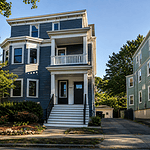
Massachusetts law lets you sell a tenant-occupied triple decker without evicting anyone first. Existing leases transfer to the new owner at closing, and your buyer pool shifts toward investors who price the building on its rent roll rather than square footage. Get your lease documentation, estoppel certificates, and disclosures in order before you list, and the sale moves like any other multi-family transaction.
Can You Sell a Triple Decker in Roxbury With Tenants Still Living There?
If you own a three-family in Roxbury with tenants currently paying rent, you’re facing a different sale than the one your neighbor down the street on a vacant single-family just went through. You have leases to honor, a rent roll to present, and a buyer who wants to underwrite cash flow before they care about paint color. That’s not a disadvantage. It’s a different transaction with its own rules. For the complete framework on selling any multi-family with tenants in Massachusetts, see selling a rental property with tenants in Boston. For multi-family selling mechanics more broadly, see selling a two-family or three-family home in Boston.
Why Your Buyer Pool Changes When Tenants Are in Place
A vacant triple decker draws a broad pool, including owner-occupants who want to live in one unit and rent the other two. An occupied building draws a narrower, more investor-heavy pool focused on cash flow rather than move-in timing. Showings require tenant cooperation and advance notice under Massachusetts law, which slows the pace of buyer tours. Appraisers and inspectors need access to each unit too, so your sale timeline depends on three tenant schedules instead of one empty building.
Pricing logic splits the same way. An investor buyer runs a capitalization rate on your actual rent roll, which means below-market leases can suppress your sale price even if the building itself is in excellent condition. Two identical Roxbury triple deckers can command different offers if one has below-market rents locked into long-term leases.
What Massachusetts Law Requires You to Disclose and Honor
You must disclose all existing lease terms, security deposit amounts, and any known material defects affecting the units. For any triple decker built before 1978, which covers most of Roxbury’s three-family housing stock, lead paint disclosure requirements apply too. Massachusetts law does not let you evict a tenant simply because you’re selling. Existing leases survive the sale and transfer to the new owner automatically at closing.
Since October 2025, Massachusetts’ 760 CMR 74.00 regulation has prohibited sellers from conditioning an accepted offer on a buyer waiving their right to a home inspection. Plan on nearly every serious buyer requesting full access to all three units. Security deposits transfer too: you must hand over any deposits, with accrued interest where applicable, to the buyer at closing.
One document that makes this whole process smoother is an estoppel certificate, a signed statement from each tenant confirming their lease terms, current rent, and security deposit held. Buyers and their lenders rely on these to verify that the rent roll you present matches what tenants confirm in writing. Collect one per unit before you go under agreement, and you’ll move through underwriting faster with a stronger negotiating position.
Getting Ready to List: Pre-Listing Checklist
- Build a complete rent roll. Current tenant, monthly rent, lease start and end date, and security deposit held for every unit.
- Request estoppel certificates early. Explain it’s a routine part of the sale, not a signal of upcoming changes.
- Gather twelve months of operating expenses. Insurance, water and sewer, owner-paid utilities, and recent capital repairs all feed a buyer’s net operating income calculation.
- Confirm your lead paint disclosure documentation. Nearly every pre-1978 triple decker in Roxbury falls under this requirement.
- Coordinate showing access with all three tenants. Build a schedule that respects Massachusetts notice requirements while still giving buyers reasonable access.
- Decide your position on rent adjustments before listing. Some sellers raise rents to market first to strengthen the income story; others leave leases as-is to keep tenants cooperative through closing.
Tax Considerations Before You Sell
If you lived in one unit for at least two of the last five years, you may qualify for a partial capital gains exclusion on that portion under federal rules, while the rented units are generally treated as investment property, including possible depreciation recapture. If you’ve owned the building purely as a rental, the sale is typically treated as an investment property disposition, which opens the door to a 1031 exchange if you plan to reinvest the proceeds. This is a conversation to have with a tax professional before you list, not after you accept an offer.
Frequently Asked Questions
Can I sell my Roxbury triple decker if tenants are still living there?
Yes. Massachusetts law allows you to sell a tenant-occupied property, and existing leases transfer to the new owner at closing. You aren’t required to evict tenants or wait for leases to expire before listing.
Do I have to disclose tenant leases when selling a triple decker in Boston?
Yes. You must disclose active lease terms, rent amounts, and security deposits held for each unit, plus lead paint disclosure for pre-1978 properties, which covers most Roxbury triple deckers.
How do estoppel certificates work when selling with tenants in place?
An estoppel certificate is a signed statement from each tenant confirming their lease terms, rent, and deposit, which the buyer’s lender and attorney use to verify your rent roll. Collecting these before going under agreement speeds up due diligence and strengthens your position.
What happens to security deposits when I sell my triple decker?
Massachusetts law requires you to transfer any held security deposits, plus accrued interest, to the buyer at closing. The buyer then becomes responsible for returning those deposits to tenants at lease end.
How does below-market rent affect my sale price?
Below-market rents can suppress your sale price significantly because investors calculate a cap rate by dividing net operating income by purchase price. A building with rents 15 to 20% under market can still sell well to a buyer planning to reset rents at turnover, but it will typically command less than a comparable building already at market rent.
Have questions? Let’s connect.
About Juan Murray
Juan Murray is a Boston broker associate with more than 30 years of experience helping buyers, sellers, and investors across Greater Boston, personally leading every transaction from the first conversation through closing.
RE/MAX Real Estate Center · (617) 721-0961
Equal Housing Opportunity. Juan Murray is licensed as a Broker in Massachusetts, regulated by the Massachusetts Board of Registration of Real Estate Brokers and Salespersons. This article is general information only and does not constitute legal, tax, or financial advice. Confirm your specific costs and obligations with your closing agent, tax advisor, or lender.