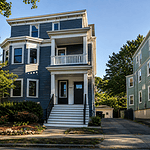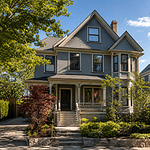
If you’ve inherited a probate triple decker in Boston, the property must pass through the Massachusetts Probate and Family Court before you or another heir can sell it. You’ll need a court-approved License to Sell Real Estate before closing, and all heirs must agree to the sale. Existing leases survive the landlord’s death and continue under the personal representative’s management.
Probate Triple Decker Boston: The Complete Heir’s Guide
If you’ve just inherited a triple decker in Dorchester, Roxbury, or Jamaica Plain, you’re dealing with two separate problems at once: a Massachusetts probate process that moves on its own legal timeline, and a multi-unit rental property that keeps generating rent, expenses, and tenant obligations while the court works through it. Neither waits for the other. For the broader process of selling any inherited home in Massachusetts, see selling an inherited home in Massachusetts. For multi-family selling mechanics specifically, see selling a two-family or three-family home in Boston.
The Probate Process for a Boston Triple Decker
Probate for a Boston triple decker is the court-supervised process of transferring a deceased owner’s property to heirs when the deed was held solely in the decedent’s name. Massachusetts law requires the estate to go through the Probate and Family Court before any sale can close. You start the process by filing a petition, either informal (Form MPC 150) or formal (Form MPC 160), with the Suffolk Probate and Family Court, located at 24 New Chardon Street inside the Edward W. Brooke Courthouse, open weekdays 8:30 AM to 4:30 PM.
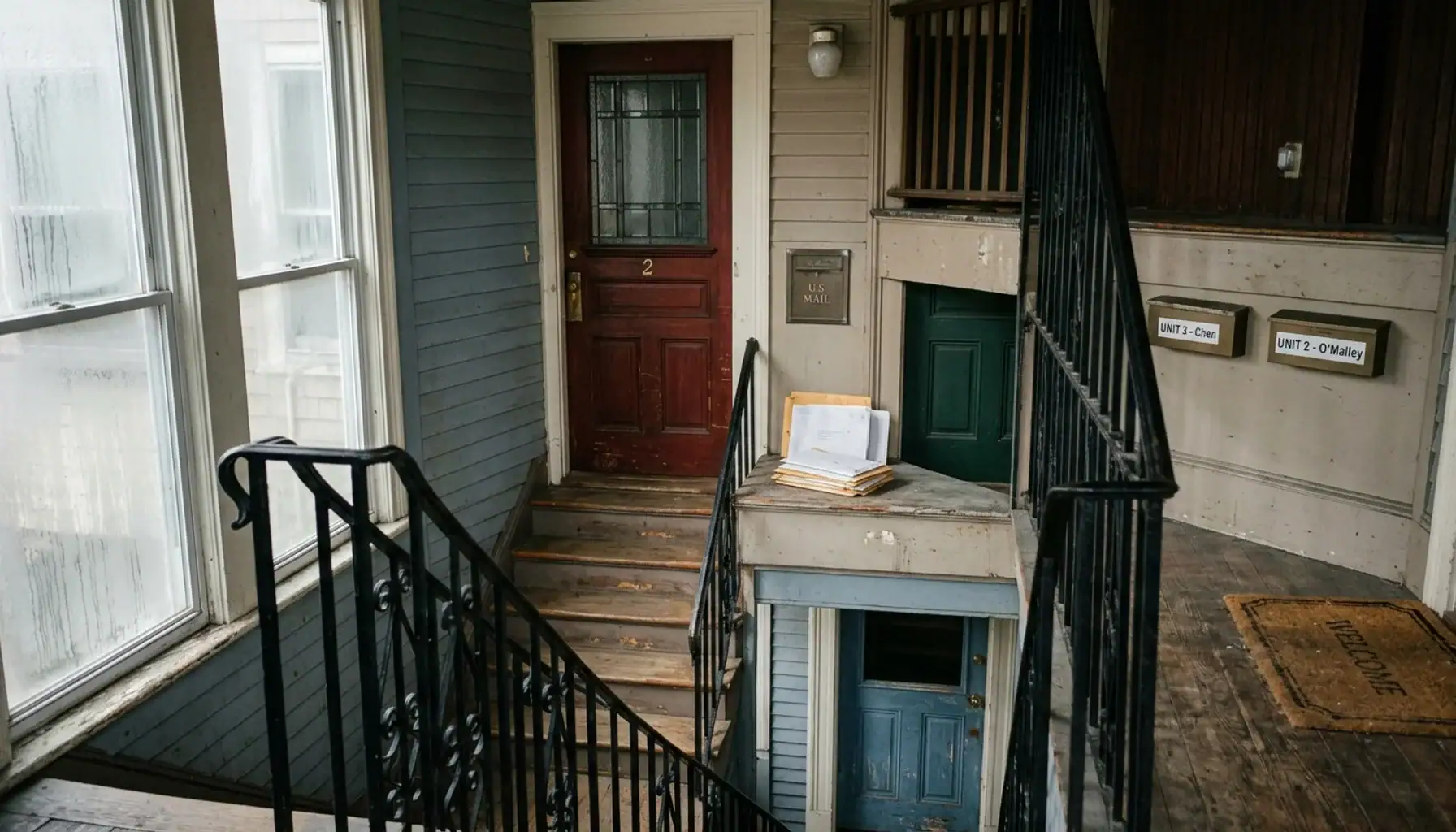
Once the court approves your petition, it issues Letters of Authority naming a personal representative who then has legal standing to manage and eventually sell the property. For a triple decker specifically, this step matters more than it does for a single-family home: three active leases mean three tenant relationships the personal representative inherits along with the deed.
Probate Costs and Timeline
Probate costs start with a court filing fee of approximately $390 for full probate ($375 filing fee plus a $15 surcharge), or about $115 for Voluntary Administration on estates valued at $25,000 or less. Beyond court fees, expect attorney fees, appraisal costs, and potential estate tax. If total estate value exceeds $2 million, Massachusetts estate tax may be owed before any distribution to heirs, an increasingly relevant threshold given that a Boston triple decker alone can now approach or exceed seven figures.
Simple estates handled informally may resolve in 2 to 6 months. A typical triple decker with tenants and multiple heirs takes 6 to 12 months. Contested or complex estates involving partition actions, disputed wills, or out-of-state heirs can run 12 months to 2 or more years. Creditors have one year from the date of death to file claims against the estate, a practical floor on closing distribution.
Managing Rental Income During Probate
Rental income from an inherited triple decker continues flowing to the estate during probate, and the personal representative is legally responsible for collecting rent, paying property expenses, and maintaining accurate records for the court’s final accounting. This income doesn’t automatically go to heirs until the estate closes. Rental income during probate is taxable to the estate, not to individual heirs, until distribution.
Tenant Rights During Probate
Tenant rights during triple decker probate in Massachusetts remain fully intact. A lease survives the death of the landlord, and tenants keep the same protections against improper eviction, security deposit mishandling, and habitability violations that applied before probate started. The personal representative steps into the landlord role. You can’t simply terminate leases to make the property easier to sell. Any attempt to remove tenants requires following standard Massachusetts eviction procedure, notice periods and all, which can add significant time to an already extended timeline.
How Multiple Heirs Complicate the Sale
Massachusetts law requires unanimous heir consent before an inherited property can be sold. If three siblings inherit a triple decker and one wants to sell while another wants to hold it as rental income, the sale is effectively stalled until they reach agreement. When heirs can’t agree, any single heir can petition the Probate and Family Court for a partition action, which can force a court-ordered sale and division of proceeds regardless of what the other heirs want. Partition actions add high legal cost to a probate timeline, and they’re far more common with multi-unit properties than single-family homes precisely because the ongoing rental income gives some heirs a reason to hold rather than sell.
Tax Implications: The Stepped-Up Basis
Inheriting a rental triple decker resets the property’s cost basis to its fair market value on the date of death, known as a stepped-up basis, which typically reduces capital gains tax exposure compared to the original purchase price decades earlier. Long-term capital gains on the eventual sale are taxed at 5 percent in Massachusetts, with an additional 4 percent surtax on income above the state’s millionaire threshold. For a triple decker that’s appreciated substantially, the stepped-up basis can mean the difference between owing tax on decades of appreciation versus owing tax only on gains since the date of death.
Step-by-Step: How to Approach a Probate Triple Decker Sale
- Confirm probate status first. Determine whether the estate needs formal or informal probate, and file the appropriate petition (MPC 150 or MPC 160) with the Suffolk Probate and Family Court.
- Get the personal representative appointed. Wait for Letters of Authority before signing any listing agreement or accepting offers; a sale agreed to before this step has no legal standing.
- Order an independent, MLS-based valuation early. Don’t rely on a generic online estimate for a three-unit property with mixed leases; get a comparative market analysis grounded in true triple-decker comps.
- Get all heirs aligned before listing. Unanimous consent is required to sell; resolve disagreements with real numbers before they escalate toward a partition action.
- Confirm tenant lease status and rights. Know exactly which units are occupied, under what lease terms, and what notice requirements apply before deciding to sell occupied or vacant.
- Secure the License to Sell Real Estate if required. Confirm with your probate attorney whether the will grants sale authority outright or whether a separate court filing is needed.
- List and sell using standard Massachusetts process. Once authority is confirmed, the Offer to Purchase, Purchase and Sale Agreement, and closing follow the same path as any Boston triple-decker sale.
Frequently Asked Questions
Does a triple decker have to go through probate if only one owner is listed on the deed?
Yes. If the deceased owner held the triple decker solely in their own name, Massachusetts law requires the estate to go through probate before it can be sold, regardless of how many heirs are named in the will.
Can heirs sell a triple decker if one sibling refuses to agree?
Not without further legal action. Massachusetts requires unanimous heir consent to sell inherited property. If one heir refuses, the sale is stalled until agreement is reached or another heir petitions for a partition action, which can force a court-ordered sale.
Do tenants have to move out before a triple decker can be sold through probate?
No. Existing leases survive the landlord’s death and probate process, and tenants keep their full legal protections. A personal representative cannot remove tenants without following standard Massachusetts eviction notice procedures, and many probate triple-deckers sell to investors while fully occupied.
What is the stepped-up basis and how does it affect taxes on an inherited triple decker?
The stepped-up basis resets the property’s cost basis to its fair market value on the date of death. This typically reduces capital gains tax owed at sale, since the taxable gain is calculated only on appreciation that occurred after the date of death, not on decades of prior appreciation.
Is a Zillow estimate accurate for pricing a probate triple decker?
No. Automated valuation tools aren’t built to account for three separate leases, mixed unit conditions, or the income-approach adjustments that a true triple-decker appraisal requires. A comparative market analysis grounded in actual MLS sales of comparable three-family properties produces a far more defensible number for probate purposes.
What happens to rental income collected during the probate process?
Rental income collected while a triple decker is in probate belongs to the estate, not to individual heirs, and is taxable to the estate until the court approves final distribution. The personal representative is responsible for depositing rent into an estate account and covering property expenses from those funds.
Do I need both a real estate attorney and a broker for a probate triple decker sale?
Yes, both roles matter and neither substitutes for the other. A probate attorney handles the court filings, License to Sell, and title clarity issues, while a broker experienced in multi-family valuation prices the property accurately and manages the sale process once legal authority is confirmed.
Have questions? Let’s connect.
About Juan Murray
Juan Murray is a Boston broker associate with more than 30 years of experience helping buyers, sellers, and investors across Greater Boston, personally leading every transaction from the first conversation through closing.
RE/MAX Real Estate Center · (617) 721-0961
Equal Housing Opportunity. Juan Murray is licensed as a Broker in Massachusetts, regulated by the Massachusetts Board of Registration of Real Estate Brokers and Salespersons. This article is general information only and does not constitute legal, tax, or financial advice. Confirm your specific costs and obligations with your closing agent, tax advisor, or lender.