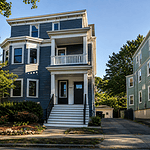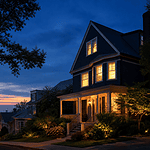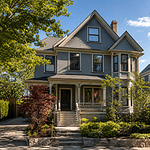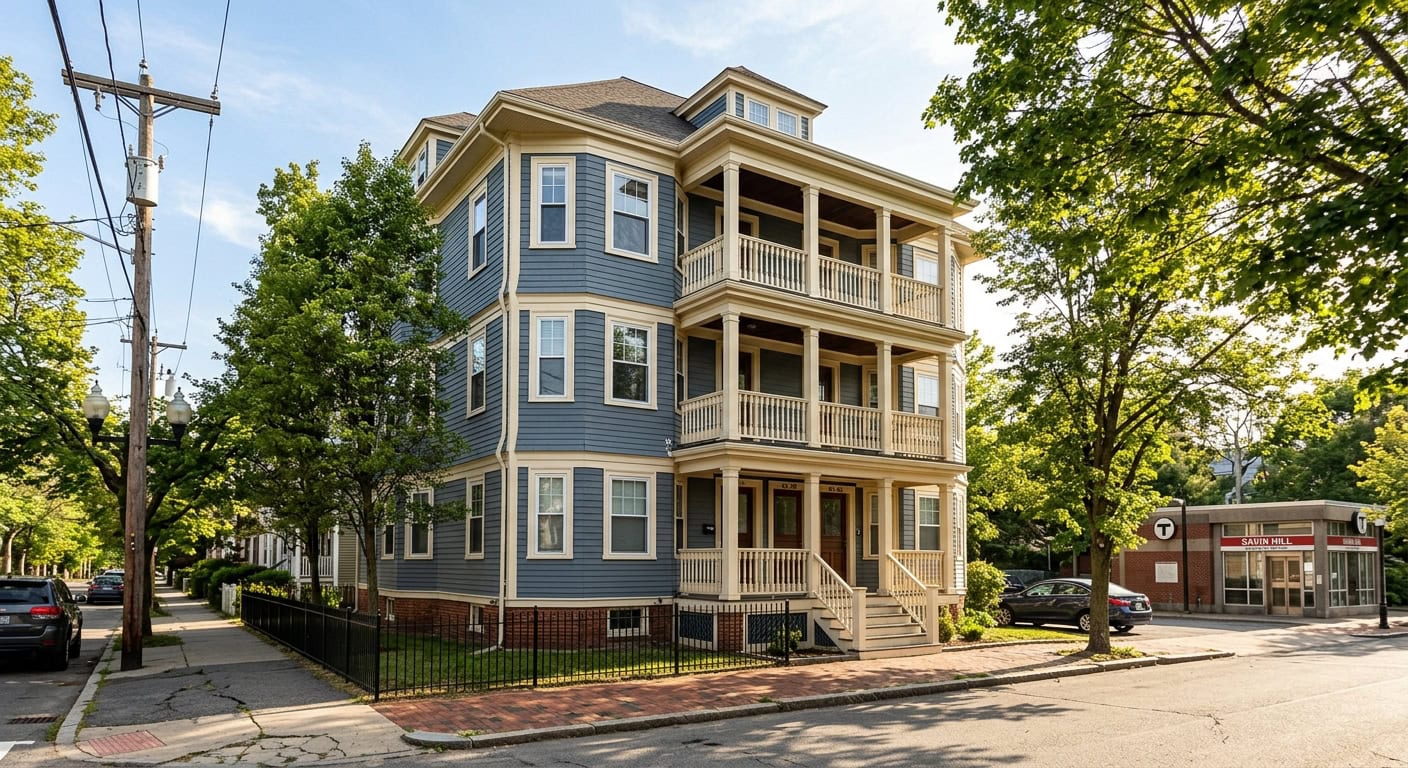
For the right buyer with real capital reserves and a clear-eyed investment strategy, yes, buying a triple-decker in Dorchester now makes sense. Well-located Dorchester triple-deckers are trading in the $950,000 to $1.4 million range in 2026, with cap rates on properties near the Red Line commonly landing between 5.5 and 6.5 percent. That math works for disciplined buyers. It does not work if you’re still running the old “live for free” projections without underwriting the building’s actual condition and permit status.
Should You Buy a Triple-Decker in Dorchester Now?
Dorchester has quietly become Greater Boston’s busiest submarket for private multifamily investment, and 2026 is shaping up to be a pivotal year for anyone weighing whether to buy in. The answer depends less on the neighborhood’s overall momentum and more on the specific building, its permit history, and your own capital position. For a broader look at how multi-family properties sell in Boston, see selling a two-family or three-family home in Boston. If you’re thinking about owner-occupying and house-hacking the purchase, see house hacking in Jamaica Plain for the strategic framework that applies across neighborhoods.
What Did the Rent Control Ruling Change for Dorchester Buyers?
The Massachusetts Supreme Judicial Court struck the statewide rent control ballot question in June 2026, ruling that a carve-out for religious institutions made the petition unconstitutional. That decision removed rent control from the November 2026 ballot and eased a significant source of uncertainty that had been suppressing multifamily deal activity across Boston, including in Dorchester. Many investors were demanding steeper discounts or walking away from deals entirely while rent control uncertainty lingered. Once the ruling came down, deal flow in neighborhoods like Dorchester began to pick back up.
Here’s the qualifier: this is relief, not resolution. Rent control advocates have continued organizing toward a revised ballot measure for 2028. If you’re buying a Dorchester triple-decker as an investment, underwrite it around today’s rules. Don’t assume they’re permanent for the life of your hold period.
What Does a Triple-Decker Actually Cost in Dorchester Right Now?
A well-maintained triple-decker in Dorchester typically lists between $950,000 and $1.4 million in 2026. That range sits meaningfully below what comparable buildings command in Jamaica Plain’s higher-end pockets, and well below Brookline or Cambridge, where similar triple-deckers often run $1.5 million to $2.5 million or more. Cap rates on well-located Dorchester triple-deckers near the Red Line stops at Savin Hill, Fields Corner, Shawmut, and Ashmont commonly run 5.5 to 6.5 percent, with some specific listings trading closer to 7 percent.
Plan on bringing real capital to the table. For a $950,000 to $1.3 million acquisition, expect to need roughly $150,000 to $250,000 in liquid funds covering a 15 to 20 percent down payment, closing costs, and reserves. Set aside another $30,000 to $50,000 for near-term repairs, since most Dorchester triple-deckers were built decades ago and commonly need work on electrical systems, plumbing, windows, or heating.
How Does Dorchester Compare to Jamaica Plain and Roxbury?
| Neighborhood | Typical Triple-Decker Price Range (2026) | Cap Rate Range | Key Consideration |
|---|---|---|---|
| Dorchester | $950,000 to $1.4 million | 5.5 to 6.5%, some near 7% | Strongest transit access via Red Line stops |
| Jamaica Plain | $1.1 million to $1.7 million+ | 4.5 to 5.5% | Higher condo conversion potential in some pockets |
| Roxbury | $850,000 to $1.3 million | 5.5 to 7% | Wider variance building to building |
Can You Still Live in One Unit and Have the Rents Cover Your Mortgage?
The classic Boston triple-decker strategy, buying a building, living in one unit, and letting rent from the other two units cover most or all of your mortgage, still works in Dorchester more often than in pricier parts of the city, though it’s harder to execute than it was a decade ago. Dorchester’s $950,000 to $1.4 million range still sits below that citywide ceiling where rent coverage breaks down, which is part of why cap rates here hold up better than in Jamaica Plain’s most expensive pockets.
Owner-occupants can access FHA financing with as little as 3.5 percent down on a 2 to 4-unit property they intend to occupy, with loan limits in Greater Boston set higher than conventional conforming limits in most of the country. That structure makes house hacking a triple-decker one of the more realistic paths into ownership for first-time buyers who can’t otherwise compete on price against cash-heavy investors.
What Mistakes Do Buyers Commonly Make With Dorchester Triple-Deckers?
The most common mistake is underwriting using gross rent multipliers pulled from a generic online estimate rather than real MLS comps for that specific block. Zestimate-style tools don’t account for unit mix, permit status, or condition, and they routinely mislead buyers into overpaying or missing genuine opportunities.
A second frequent mistake: skipping a full inspection because a listing looks move-in ready. As of October 2025, Massachusetts banned inspection contingency waivers. That change protects buyers, but it also means you need to build inspection timelines into your offer strategy from day one. Third, buyers frequently underestimate financing timelines on multi-unit properties when one or more units has an unclear permit history. Confirming legal occupancy for every unit before you write an offer saves weeks of delay and, in some cases, an entire deal falling apart at the appraisal stage.
What to Prioritize When Evaluating a Specific Triple-Decker
- Verify permits for every unit through the City of Boston’s Inspectional Services Department before you go under agreement. An unpermitted third unit can force a lender to underwrite the property as a two-family, changing your loan terms entirely.
- Order a full inspection covering electrical, plumbing, roof, and foundation. Many Dorchester triple-deckers were built in the early 1900s, and knob and tube wiring in even one unit can complicate insurance and financing.
- Request current leases and rent rolls directly, not verbal rent estimates from the seller. Massachusetts law gives existing tenants specific protections at sale.
- Pull insurance quotes before closing, since older systems can affect what carriers will write and at what premium.
- Run your own comparative market analysis against recent triple-decker sales within a half-mile, not a citywide average, to confirm the asking price reflects real comps.
Frequently Asked Questions
Is now a good time to buy a triple-decker in Dorchester?
For buyers with adequate capital reserves and realistic underwriting, yes. Dorchester triple-deckers in 2026 typically trade between $950,000 and $1.4 million with cap rates of 5.5 to 6.5 percent near Red Line stops, and the June 2026 rent control ruling has eased investor uncertainty. Treat current conditions as favorable, not guaranteed permanent.
How much money do I need to buy a triple-decker in Dorchester?
For a $950,000 to $1.3 million acquisition, plan on $150,000 to $250,000 in liquid capital for a 15 to 20 percent down payment, closing costs, and reserves, plus another $30,000 to $50,000 set aside for near-term repairs. Owner-occupants using FHA financing can put as little as 3.5 percent down on a 2 to 4-unit property they intend to live in.
Can rents from a triple-decker actually cover the mortgage in Dorchester?
It’s harder than it used to be, but it’s more achievable in Dorchester than in pricier Boston neighborhoods. Dorchester’s pricing still sits below the citywide ceiling where rent coverage typically breaks down, making the owner-occupant strategy more realistic here than in Jamaica Plain’s highest-priced pockets or in Brookline.
Does the Massachusetts inspection waiver ban affect triple-decker purchases?
Yes. As of October 2025, Massachusetts prohibits buyers from waiving their right to a home inspection, and this applies to multi-unit properties like triple-deckers. Build inspection timelines into your offer strategy rather than assuming you can skip this step to compete in a multiple-offer situation.
What’s the biggest red flag when buying a Dorchester triple-decker?
Unpermitted units are the most common and costly red flag. If a unit isn’t legally permitted, it can force your lender to underwrite the property differently, change your appraised value, and in some cases derail financing entirely. Always verify permit status for every unit before making an offer.
How does Dorchester compare to Roxbury for triple-decker investment?
Roxbury often prices in a comparable or slightly lower range than Dorchester, with cap rates that can run as high as 7 percent on well-located buildings, but pricing varies significantly block to block in both neighborhoods. Transit proximity, particularly to Red Line stops in Dorchester, tends to be the strongest driver of value in both areas.
Have questions? Let’s connect.
About Juan Murray
Juan Murray is a Boston broker associate with more than 30 years of experience helping buyers, sellers, and investors across Greater Boston, personally leading every transaction from the first conversation through closing.
RE/MAX Real Estate Center · (617) 721-0961
Equal Housing Opportunity. Juan Murray is licensed as a Broker in Massachusetts, regulated by the Massachusetts Board of Registration of Real Estate Brokers and Salespersons. This article is general information only and does not constitute legal, tax, or financial advice. Confirm your specific costs and obligations with your closing agent, tax advisor, or lender.