Should I rent or buy a house in 2026? If you plan to stay put for at least five years and can comfortably absorb the full monthly cost of ownership (not just the mortgage payment), buying wins financially in most cases in 2026. If you’ll likely move within two to three years, or the monthly gap between renting and owning is more than a few hundred dollars, renting is the smarter play until that changes.
Key Takeaways
-
The 5 to 7 year rule still holds in 2026: buying rarely pencils out financially if you’ll sell before that window, once you count closing costs and selling costs.
-
New home sales nationally sat at a seasonally-adjusted annual rate of 628,000 in June 2026, with 9.3 months of supply, according to the U.S. Census Bureau and HUD.
-
Nationally, only 12% of buyers waived inspections in 2026 (down from 18% the prior year), and 15% waived appraisals, according to the National Association of Realtors’ Realtors Confidence Index.
-
First-time buyers now make up 31% of home sales nationally in 2026, while all-cash deals hold steady at 27%, according to NAR.
-
Median down payment for first-time buyers nationally runs around 10%, the highest share since 1989, meaning a $600,000 Boston condo could require roughly $60,000 down plus 3 to 5% in closing costs.
-
Massachusetts’ inspection waiver ban (760 CMR 74.00), effective October 2025, means sellers can no longer condition an accepted offer on a buyer skipping their inspection.
I get some version of this question almost every week from clients in Jamaica Plain, Roslindale, Hyde Park, Dorchester, and Roxbury. There’s no universal answer, but there is a reliable framework, and it comes down to your timeline, your monthly cash flow, and how the specific numbers on a specific property compare to what you’re paying now in rent.
This isn’t a generic pros-and-cons list. I’m going to walk through the actual break-even math, what 2026’s mortgage rate and inventory environment mean for your decision, and where the rule of thumb breaks down for Boston’s housing stock specifically, triple-deckers, two-families, and condos included. At Juan Real Estate Group, I’ve run this exact comparison for buyers weighing a Roslindale two-family against another year of renting in Jamaica Plain, and the math surprises most of them, in both directions.
Will 2026 Be a Good Year to Buy a House?
2026 is a reasonable year to buy if you find the right property and plan to hold it for 5+ years, but it is not uniformly favorable across the board. National new home inventory sits at 9.3 months of supply as of June 2026 (U.S. Census Bureau and HUD), which is a more balanced market than the tight conditions of 2021 through 2023, giving buyers more negotiating room than they’ve had in years.
Mortgage rates have stabilized rather than dropped sharply, and economists broadly project a more stable 2026 housing market with slower price growth instead of a rate cliff. That means waiting for a dramatic rate drop is a gamble, not a strategy. Meanwhile, new home sales in June 2026 ran at a seasonally-adjusted annual rate of 628,000, up 1.6% from May but down 5.6% from June 2025, according to Census and HUD data. That’s a market cooling gently, not crashing.
Nationally, first-time buyers represent 31% of transactions in 2026, and appraisal and inspection waivers have both declined, signaling buyers are negotiating more contingencies back into their offers instead of competing blind. That’s a healthier environment for a first purchase than the bidding wars of a few years ago.
What Is the True Break-Even Point Between Renting and Buying?
The break-even point is the number of years you need to own a home before the equity built and appreciation gained outweigh the upfront transaction costs of buying and selling. For most 2026 U.S. markets, that threshold lands between 5 and 7 years, a figure widely used across financial planning tools and consistent with what I see play out in actual Boston closings.
Here’s why the timeline matters so much. Closing costs on a purchase typically run 2 to 5% of the purchase price. On a $600,000 Jamaica Plain condo, that’s $12,000 to $30,000 before you’ve moved a single box. Sell within two years, and you’re also paying selling costs on the way out, agent commissions, closing costs, and fees among them, which can add tens of thousands of dollars on that same price point. Stack both transaction costs against only two years of appreciation and modest principal paydown, and you can easily net less than if you’d rented and invested the difference.
Stretch that same purchase to 7 or 8 years, and the math flips. You’ve paid down meaningful principal, captured a few years of appreciation (historically averaging 4 to 5% annually per FHFA data over the long term), and amortized those upfront costs across far more time. This is why I ask every buyer client one question before we tour a single property: how long do you realistically expect to stay?
What Does It Actually Cost to Own a Home Versus Rent It?
Homeownership costs extend well beyond the mortgage payment, and renters skip nearly all of them. A renter’s monthly obligation is rent plus renters insurance, typically $15 to $40 a month. An owner’s monthly obligation includes principal, interest, property tax, homeowners insurance, and often private mortgage insurance or condo fees, plus ongoing maintenance that renters never see on a bill.
On a $420,000 home with 10% down at a 6.7% rate, principal and interest alone run roughly $2,700 a month. Add property taxes (nationally averaging about 1.1% of home value annually, so roughly $4,620 a year, though Massachusetts rates vary by municipality and you should verify your specific rate with the local assessor). Add homeowners insurance, typically $1,500 to $2,000 a year. If your down payment is under 20%, tack on PMI at roughly 0.5 to 1.5% of the loan annually, another $167 to $500 a month on a $400,000 loan.
Then there’s maintenance. The standard planning rule is 1% of home value per year, about $4,200 annually on a national average home. However, older housing stock like Boston’s triple-deckers and pre-war two-families often runs higher given knob-and-tube wiring, older roofs, and aging systems. Condo buyers trade maintenance line items for HOA fees, which average $100 to $300 a month nationally but exceed $700+ in higher-amenity buildings.
|
Cost Category |
Renting |
Buying |
|---|---|---|
|
Monthly housing payment |
Rent only |
Principal + interest + taxes + insurance |
|
Upfront cash needed |
First month + security deposit |
Down payment (often ~10% for first-timers) + 2-5% closing costs |
|
Ongoing maintenance |
Landlord’s responsibility |
~1% of home value annually, or more for older housing stock |
|
Insurance |
$15-$40/month renters insurance |
$1,500-$2,000/year homeowners insurance |
|
PMI (if under 20% down) |
None |
0.5%-1.5% of loan annually |
|
Equity building |
None |
Builds with every principal payment |
|
Exit cost if you leave |
Lease end or early termination fee |
Agent commission plus closing costs |
How Do Tax Benefits Change the Rent Versus Buy Calculation?
Mortgage interest and property tax deductions can lower your effective cost of ownership, but only if you itemize, and fewer homeowners itemize today than a decade ago because of a higher standard deduction. If your total itemized deductions, including mortgage interest and state and local taxes, don’t exceed the standard deduction, the tax benefit of owning is smaller than most rent-vs-buy calculators assume.
Where the tax code clearly favors buying is at the exit. Under IRS Publication 523, single filers can exclude up to $250,000 in capital gains on the sale of a primary residence, and married couples filing jointly can exclude up to $500,000, provided you’ve owned and lived in the home for the required period. Renters never access this benefit because they never accumulate a taxable gain to exclude in the first place.
For Massachusetts sellers specifically, this capital gains exclusion often matters more than the annual mortgage interest deduction, especially in Boston neighborhoods where appreciation has been meaningful over a multi-year hold. I walk clients through this exact calculation before they list, because the tax exposure changes the net proceeds conversation entirely. If you’re weighing a sale that could trigger gains beyond the exclusion, it’s worth understanding how state and local tax changes affect your bottom line before you price the home.
Should First-Time Homebuyers Rent or Buy in 2026?
First-time buyers should buy in 2026 only if they’ve secured a stable down payment plan and can pass the 5-year timeline test, since down payment assistance programs and lower entry price points make ownership newly accessible even in a still-expensive market. First-time buyers represented 31% of transactions nationally in 2026, evidence that entry-level activity hasn’t stalled despite rate levels holding above the ultra-low years of 2020 through 2021.
The upfront cash hurdle is real. A median first-time buyer down payment runs around 10% nationally, the highest share since 1989, which on a $500,000 Roslindale or Hyde Park property is about $50,000, plus another 3 to 5% in closing costs, pushing total cash needed toward $65,000 to $75,000. That’s the number that stops most renters cold, and it’s exactly where down payment assistance programs and first-time buyer initiatives can close the gap.
I tell every first-time buyer the same thing: don’t assume you need 20% down. Programs exist specifically to reduce that upfront burden, and MassHousing offers Massachusetts-specific paths worth exploring before you write off buying entirely. Check the MassHousing website directly for current program guidelines and eligibility, since terms change and you should verify the current figures before assuming you qualify.
What Is the 3-3-3 Rule for Buying a House?
The 3-3-3 rule is a budgeting guideline suggesting you put down at least 3% (or more, depending on the loan program), keep your total monthly housing cost under 3 years’ worth of your gross salary as a rough home price ceiling, and hold at least 3 months of expenses in reserve after closing. It’s a simplified sanity check, not a strict formula, and it works better as a gut check than a precise calculation.
Applied practically: if your household income is $120,000, the 3-3-3 framework suggests a home price ceiling somewhere around $360,000, which is far below most Jamaica Plain or Dorchester listing prices today. That’s exactly why the rule needs local adjustment. In higher-cost markets like Greater Boston, the ratio that matters more is your monthly housing payment as a share of gross income, not a flat multiple of salary.
Where the 3-3-3 rule genuinely helps: the reserve requirement. Too many first-time buyers empty their entire savings account for the down payment and closing costs, then face a furnace repair or a knob-and-tube rewiring bill with zero cushion. Keep three months of expenses in reserve, minimum, after the closing table.
Is It Smart to Buy or Rent Right Now in Boston?
It’s smart to buy right now in Boston if your timeline clears 5 years and the monthly cost gap between renting and owning a comparable property is manageable within your budget. It’s smart to keep renting if you’re likely to relocate for work within a couple of years or the math doesn’t work yet. Nationally, the 2026 market gives buyers more room to negotiate than in recent years, with appraisal waivers down to 15% and inspection waivers down to 12%, according to the National Association of Realtors’ Realtors Confidence Index, meaning fewer buyers are competing blind.
Massachusetts’ inspection waiver ban, formally 760 CMR 74.00 and effective October 2025, also changed the calculus in your favor. Sellers can no longer require buyers to waive their inspection as a condition of an accepted offer, with narrow exceptions for auctions, foreclosures, certain family transfers, and pre-completion new construction. That protection didn’t exist a year and a half ago, and it materially reduces the risk of buying a home with hidden defects, a real concern in a city full of century-old triple-deckers with original wiring and plumbing.
Rate-sensitive buyers waiting for a dramatic drop should understand that waiting has a cost too. Rent growth has averaged 4 to 6% annually over the past decade; a 5% increase on $2,200 monthly rent adds $110 a month, or $1,320 a year, while you wait. If prices stabilize as economists project for 2026, waiting doesn’t guarantee a better entry point; it just guarantees another year of rent with nothing to show for it. I’ve discussed this exact tradeoff in more depth in my piece on whether to buy in Boston now or wait.
What Alternatives Exist Beyond a Straight Rent-or-Buy Choice?
House hacking, an owner-occupied multi-family purchase where rental income from other units offsets your mortgage, is a middle path that doesn’t get enough attention in most rent-vs-buy conversations. Buying a triple-decker in Dorchester or Roxbury and renting two units while you live in the third can turn your housing cost from a pure expense into a partially self-funding investment.
This strategy works specifically well in Boston because the triple-decker and two-family stock is so common across Dorchester, Roxbury, and parts of Roslindale. I’ve helped clients run these numbers, and the rent from one or two units frequently covers 40 to 60% of the total mortgage payment, depending on the property and current rents. If you want the specifics on how this plays out in practice, my breakdown of house hacking without losing your lifestyle walks through real scenarios, and my guide to buying a triple-decker in Dorchester covers the property-specific due diligence.
Co-buying with a family member or friend is another underused option, splitting the down payment and monthly obligation between two incomes to hit a price point neither could reach alone. It requires a clear legal agreement on ownership shares and an exit plan if one party wants out, but it’s a legitimate strategy for buyers priced out of Boston on a single income.
What Emotional and Lifestyle Factors Belong in This Decision?
Financial math should drive most of your decision. Still, job stability, family circumstances, and how much flexibility you need matter too, and ignoring them leads to decisions that look good on a spreadsheet and fall apart in practice. About 35% of Americans move for job-related reasons, and the average person changes jobs roughly 12 times over a career, so a five-year commitment isn’t automatic for everyone.
Remote work has genuinely changed this calculation for some buyers. If your job no longer ties you to a specific commute radius, your five-year hold assumption might hold up better than it would have five years ago, since you’re not locked into staying near a single employer. For others, hybrid schedules mean the commute still matters, and buying too far from your office defeats the purpose of ownership if you’re back in the building three days a week.
I always ask clients directly: what would make you sell in year two? If the honest answer is “a job offer somewhere else” or “starting a family and needing more space,” that’s not a reason to avoid buying; it’s a reason to buy something with resale flexibility, like a condo or smaller single-family instead of a property that only works for your exact current situation.
How Do You Choose the Right Path for Your Situation?
Choosing between renting and buying in 2026 comes down to running your specific numbers, not applying a generic rule. Start with your realistic timeline, then calculate your true all-in monthly ownership cost, compare it against current rent for a similar property, and factor in your reserve cushion after closing.
-
Confirm your timeline. If you can’t commit to 5 years in the property, lean toward renting unless you have a specific exit strategy like house hacking with strong rental demand.
-
Calculate your true monthly cost. Add mortgage principal and interest, taxes, insurance, PMI if applicable, and a realistic maintenance or HOA estimate. Don’t rely on a lender’s estimate that omits maintenance.
-
Compare against actual rent, not a rent-vs-buy calculator’s default. Pull real comparable rental listings in Jamaica Plain, Roslindale, or wherever you’re looking, not a national average.
-
Confirm your down payment and closing cost cash on hand, plus a 3-month expense reserve left over.
-
Check current down payment assistance eligibility if you’re a first-time buyer, since these programs can materially change your break-even math.
-
Talk through the specific property with a broker who knows the neighborhood, not just a national calculator, since Boston’s triple-decker and condo stock behaves differently than a generic suburban single-family.
A common mistake I see: buyers use an online rent vs buy calculator with default national assumptions and treat the output as gospel for a Boston purchase. Those tools rarely account for Massachusetts-specific closing costs, local property tax rates, or the maintenance realities of century-old housing stock. Use them as a starting point, not a final answer.
Frequently Asked Questions
Will property prices go down in 2026?
Economists broadly project a more stable 2026 housing market with slower price growth rather than a sharp decline. New home median sales prices actually dipped 2.7% year-over-year through June 2026 per Census Bureau data, so modest cooling is happening in some segments, but a broad crash isn’t the expected pattern this year.
Is it cheaper to rent or buy a house right now?
On a pure monthly cash basis, renting is usually cheaper in the first one to two years once you count closing costs and upfront cash requirements. Buying becomes cheaper on a total-cost basis once you factor in equity building and hold the property past the 5 to 7 year break-even window.
Should I buy a house now or wait until 2027?
Waiting only makes sense if you expect a meaningful improvement in your down payment, income, or the specific property options available, since rate and price predictions rarely play out exactly as forecast. If you’re financially ready and plan to stay 5+ years, waiting mainly costs you a year of rent growth with no guaranteed better entry point.
What is the 5 to 7 year rule for buying a house?
The 5 to 7 year rule states that buying only makes financial sense if you plan to stay in the property at least that long, since it takes roughly that much time to recoup closing costs, selling costs, and build enough equity to outpace what renting and investing the difference would have earned.
How much house can I afford in Boston in 2026?
Affordability depends on your income, debt, down payment, and the specific loan program. Still, a useful starting check is keeping your total monthly housing payment, including taxes and insurance, at or below roughly 28 to 30% of gross monthly income. Get pre-approved with a lender to see your exact number rather than relying on a rule of thumb alone.
Does a rent vs buy calculator actually work for Boston?
Generic rent vs buy calculators give you a useful starting framework but often use national default assumptions for property tax rates, closing costs, and appreciation that don’t match Boston specifically. Use them for the general shape of the answer, then verify the inputs against actual Massachusetts closing costs and your target neighborhood’s rents.
What’s the biggest hidden cost of homeownership renters don’t face?
Ongoing maintenance is the cost renters consistently underestimate, since a landlord absorbs repair bills that a homeowner pays directly. Budget roughly 1% of home value annually, and expect that figure to run higher in older Boston housing stock with original systems and wiring.
The Bottom Line for 2026
The rent or buy decision in 2026 isn’t a question with one universal answer, but it is a question with a clear method. Confirm you can hold the property 5+ years, calculate your true all-in monthly cost against real local rents, and check your reserve cushion after closing. Buyers who run these numbers honestly make better decisions than buyers who chase a rate prediction or a Reddit thread.
The 2026 market gives you more room than it has in years, with inspection and appraisal waivers down nationally, first-time buyer share holding at 31%, and a new Massachusetts inspection protection law backing you up on every offer you make in Greater Boston. Whether that points you toward buying now, waiting another year, or exploring a house-hacking path in Dorchester or Roxbury depends entirely on your numbers, not the headlines.
I’ve run this exact analysis for dozens of buyers across Jamaica Plain, Roslindale, Hyde Park, Dorchester, and Roxbury, and no two situations look the same on paper. If you want a straight answer built around your specific finances and the properties actually available right now, get started with Juan Real Estate Group for a complimentary and confidential consultation. Real Estate, Simplified.
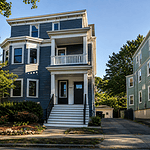
If you’re weighing whether to buy now or keep renting, a property like this one, priced and positioned with real MLS comps rather than a generic online estimate, is exactly the listing worth running the numbers on. Schedule a confidential consultation, and we’ll go through your specific break-even math together.
Written by Juan Murray, Broker Associate, RE/MAX Real Estate Center, 30+ years of Boston real estate experience at Juan Real Estate Group
Equal Housing Opportunity.